

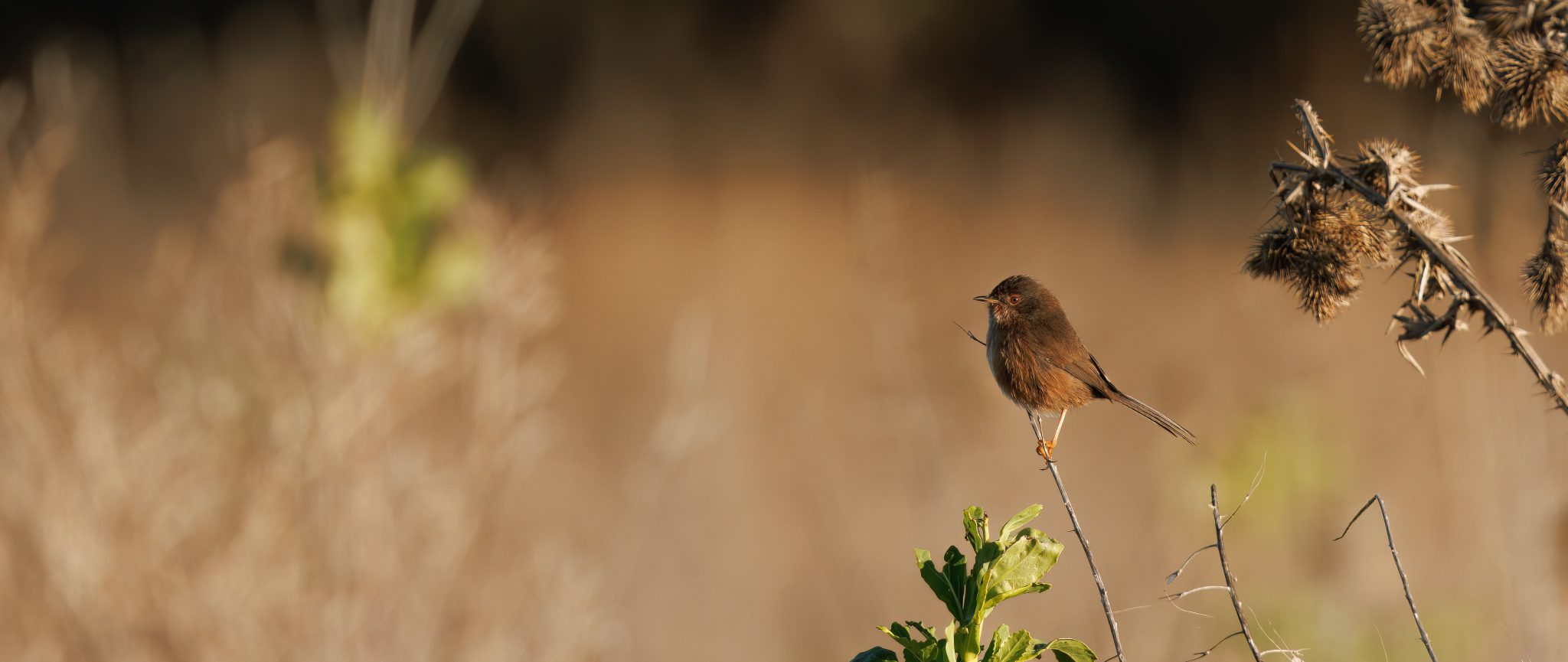
Back in the spring, one lucky birder at our conference’s silent auction won the chance to spend a morning bird ringing with SOS Chair Clare Buckle. On the 22nd of August, our winner joined a team of four ringers – Clare Buckle, SOS Database Manager Dr John Newnham, Knepp Lead Ecologist Matt Phelps, and Becky Parangi-Sayers – for a sunny session at the Knepp Wildland.
What is bird ringing, and why does it matter?
For anyone new to it, ringing involves carefully catching wild birds in fine-mesh mist nets, fitting each with a uniquely numbered and lightweight metal ring around its leg, recording a set of measurements, and releasing each unharmed. Every ring carries a unique number so that, if the bird is ever caught again, its movement can be traced. This gives us valuable insight into lifespans, migration, and how well the population is faring.
Knepp is a particularly rewarding place to do this work. The estate’s rewilding project has transformed former farmland into a medley of scrub, wetland, and wood pasture that supports a diverse population of birds.
An early start and a busy morning
The team met at 6am to put up five mist nets. They targeted passerines, or perching birds, to see which species were using Knepp during their migration journey. It was a productive morning with 65 birds caught in total.
Willow Warblers were the most numerous species, with a total of 29 birds ringed. One was a paler adult, and the rest were all lemon-yellow juveniles.
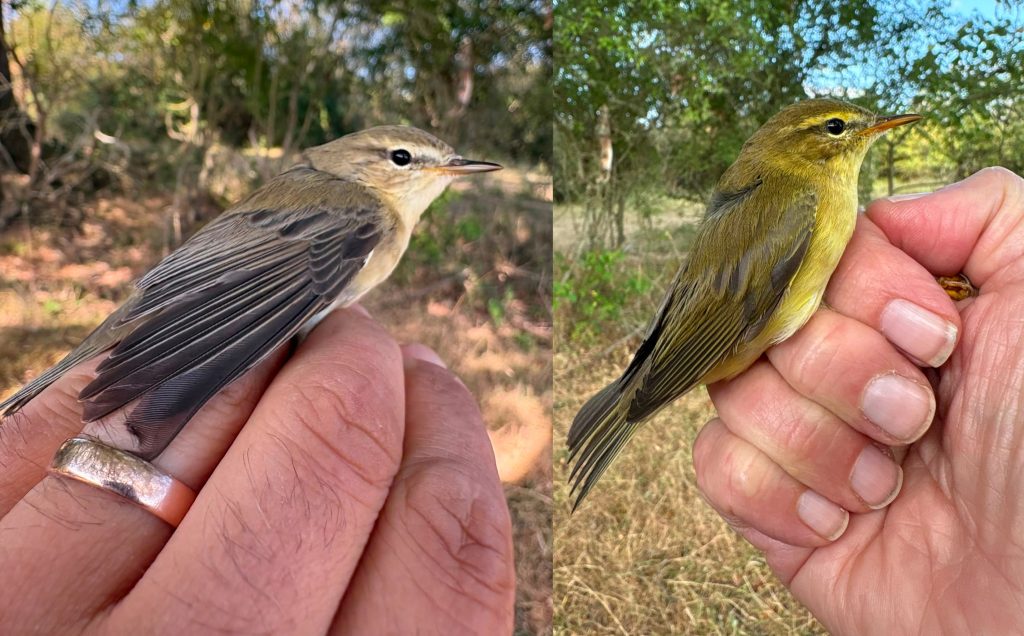
Common Whitethroats and Lesser Whitethroats passed through the site, along with plenty of Blackcaps. But the star of the day was a beautiful juvenile male Redstart, with its rust-red tail on full display.
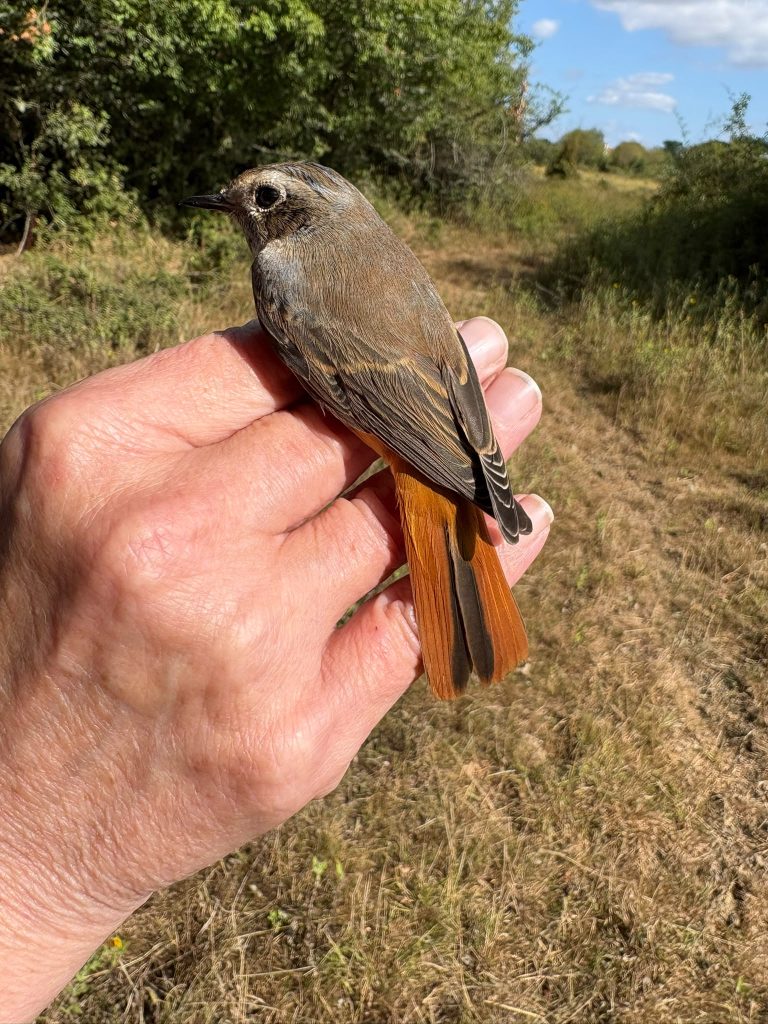
These species travel incredible distances as they migrate. Redstarts head for the Sahel region of Central and West Africa for the winter, while the Willow Warblers and the Common Whitethroats face an even longer journey. Some travel as far as South Africa before returning to Sussex to breed in the spring. That’s a round trip of about 8,000 miles!
Along with these migrating birds, the team also caught a stunning male Bullfinch, Blue and Great Tits, and a Goldcrest – Britain’s smallest bird.
Hands-on science
Throughout the morning, the ringers talked our winner through the techniques used to age and sex each bird – from plumage details like the juvenile Willow Warblers’ yellow wash, to more subtle clues in feather shape, wear, and signs of moult. They took biometric measurements, including wing length, weight, and stored fat. Our winner also got the chance to handle and release several birds themselves.
A huge thank you to Clare, John, Matt, and Becky for sharing their expertise, and to Knepp for hosting. Sessions like this are more than a memorable day; the data collected builds up our understanding of how Sussex’s migrant birds are faring, at a time when many species are under real pressure.
Keep an eye out for our 2027 conference – we hope to offer a ringing session at another silent auction next year!
All birds ringed and released under licence by BTO ringers.