

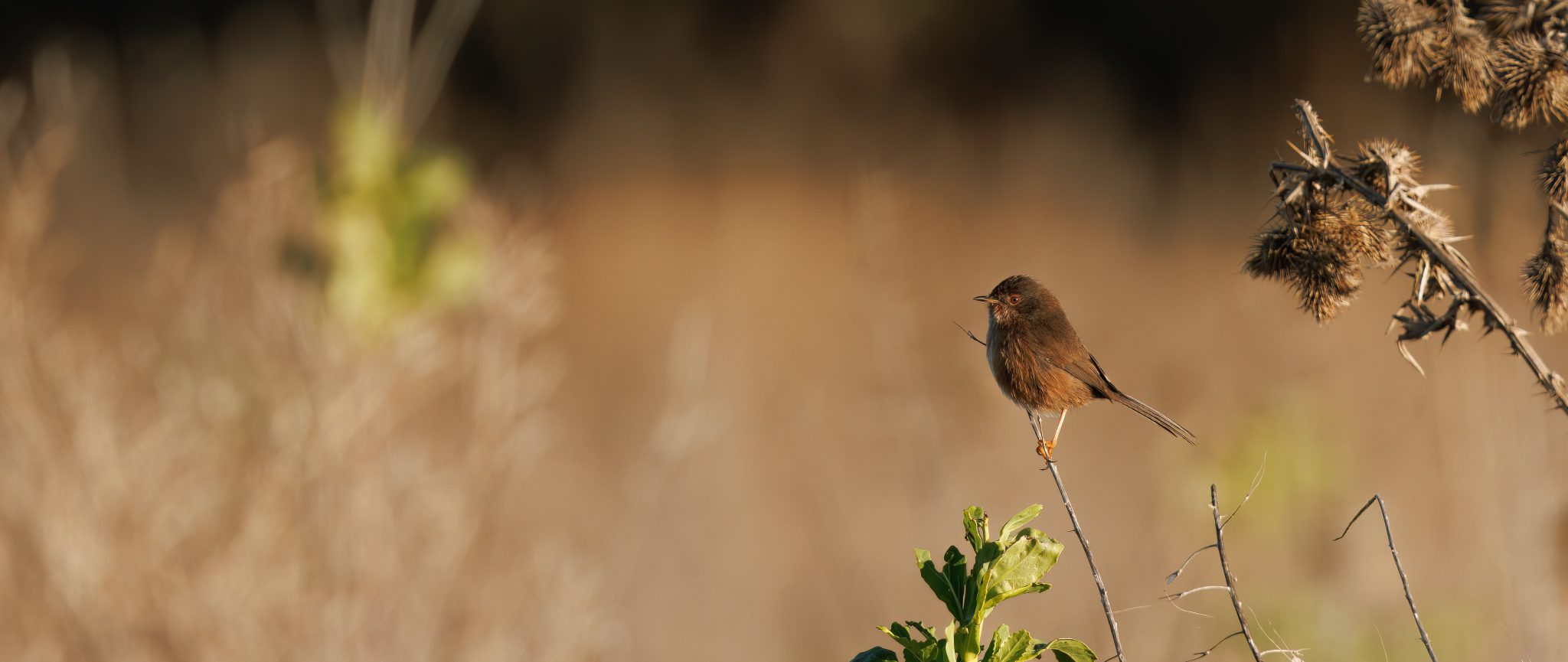
October is one of the most exciting months of the year for birding in Sussex. Autumn migration continues, with the departure of the last summer visitors and the arrival of the first true winter visitors, including Brent Geese, Redwings and Fieldfares.
Weather can have a major influence on what is found. South-easterly winds combined with overcast, damp or drizzly conditions can be particularly productive for Ring Ouzels, while also bringing birds from continental Europe and creating the potential for some of the year’s most exciting rarities. For the Sussex birder, almost any day in the field can produce a surprise.
This is the final article in the series, and October provides a fitting conclusion, with a combination of winter arrivals, visible migration, seawatching and the ever-present possibility of finding something unexpected.
Winter visitors arrive
One of the most noticeable changes during October is the arrival of our winter visitors. The first Dark-bellied Brent Geese will have already reached Sussex by the end of September, but numbers typically build through October as more birds arrive from their Arctic breeding grounds. Flocks of Brent Geese and other wildfowl can be seen moving along the coast before settling at sites such as Pagham and Chichester Harbours.
October is also the month when the first Redwings and Fieldfares begin arriving from Scandinavia. Listen for the thin, high-pitched calls of Redwings passing overhead, particularly at night.
Other winter visitors to look for include Brambling, Siskin and Redpoll, although numbers of these species can vary considerably from year to year. Early signs suggest that this could be the first autumn and winter period with plentiful beech mast since 2023/24. If that proves to be the case, there is hope for good numbers of Bramblings and other finches in the county’s beech woods.
Migrant passerines
Although many of the summer visitors have now departed, October can still produce a good variety of migrant passerines. Coastal bushes, hedgerows and areas of scrub should be checked carefully, particularly during periods of suitable weather.
Blackcaps and Chiffchaffs remain among the commonest migrants, with birds continuing to move through Sussex well into the month. Firecrests, Goldcrests and continental Robins can also be encountered in suitable cover, while Black Redstarts, Stonechats and Wheatears are worth looking for in open areas along the coast and on the Downs.
October is also a particularly good month for Yellow-browed Warbler. These tiny Siberian migrants are regular autumn visitors to Sussex, albeit in lower numbers than on the east coast. Coastal sites such as Beachy Head, Seaford Head and Pagham Harbour are all capable of producing birds. Their distinctive, high-pitched call is much easier to detect than the birds themselves, so learning the call is highly recommended.
Ring Ouzels
October is potentially one of the best months of the year to look for Ring Ouzel in Sussex as birds pass through the county on their autumn migration.
South-easterly winds combined with overcast, damp or drizzly weather can be particularly favourable, with birds settling temporarily to forage in areas of rough grassland, short turf, scrub and scattered bushes.
Beachy Head and Cissbury Ring are the obvious places to try, but other suitable areas of downland should not be overlooked. Ring Ouzels can be surprisingly elusive, so scanning carefully from a vantage point is often more productive than simply walking from bush to bush.
Migration spectacles
October can provide some impressive visible migration as birds continue to move along the Sussex coast and Downs. Large flocks of Brent Geese may pass westwards close inshore, while on suitable mornings visible migration watches at places such as Beachy Head and Fairlight Country Park can produce a steady stream of birds moving along the coast. Chaffinches, Goldfinches, Linnets, Redpolls, Siskins, Meadow Pipits and Skylarks can all feature, with the composition of the movement varying according to the weather and wind direction. Scarcer species such as Brambling and Woodlark are also possible.
Seawatching
October can be an exciting month for seawatching, particularly when strong winds develop. As seabirds move through the Channel, autumn gales can bring birds close to shore and provide opportunities for species that are otherwise difficult to see from land.
Balearic, Manx and Sooty Shearwaters, along with Arctic and Great Skuas, are key targets. Exposed viewpoints such as Selsey Bill, Splash Point, Cow Gap and Langney Point are worth checking when conditions are favourable.
Scarcer species including Grey Phalarope, Leach’s Storm Petrel and Sabine’s Gull are among the other possibilities, particularly after severe gales.
It is worth remembering, however, that October seawatching can be hard work. Long periods of apparently empty sea are inevitable, but perseverance can occasionally be rewarded spectacularly.
Raptors
October sees the return of Hen Harriers and Merlins to Sussex, where they spend the winter hunting over areas of open downland and the various river valleys that cut through the Downs.
The Burgh, near Burpham, is an often reliable site for both species, while other possibilities include Amberley Wildbrooks and Pulborough Brooks in the Arun Valley.
There have already been a number of sightings of Short-eared Owls at coastal sites such as Beachy Head, Seaford Head and the Selsey Peninsula this autumn. Further sightings are likely at these locations throughout October as more birds arrive from the continent to spend the winter in the UK.
Rarities
October is potentially one of the most exciting months of the year for finding a rarity in Sussex. The county’s position on the south coast means that birds displaced from continental Europe and further afield can turn up, particularly following periods of easterly or south-easterly winds when they may make landfall along the Sussex coast.
Coastal bushes, gardens, sheltered valleys and areas of scrub should all be checked carefully after suitable weather. Dusky Warbler, Pallas’s Warbler, Radde’s Warbler and Little Bunting are among the possibilities that can generate considerable excitement.
Better still would be a twitchable Olive-backed Pipit or Red-flanked Bluetail, both of which have occurred previously in Sussex in October, but unfortunately none of the previous records has lingered long enough to give local birders a realistic chance of seeing them.
Tips for October Birding
• Check the weather: Easterly and south-easterly winds can bring migrants, including Ring Ouzels, as well as rarities from continental Europe. October is a prime month for something genuinely unexpected to turn up.
• Watch the skies: Visible migration can produce large movements of finches, pipits and Skylarks, particularly along the coast and Downs.
• Keep seawatching: Autumn gales can bring shearwaters, skuas and other scarce seabirds within range of the Sussex coast.
• Check suitable cover: Coastal bushes, scrub, gardens and sheltered valleys can all hold migrant passerines and, occasionally, something much rarer.
October offers an excellent finale to the birding year and to this series. With winter visitors arriving, migration still in full swing and the possibility of a Sussex rarity around almost every corner, there is every reason to get out birding and see what the month can produce.