
The colony of Kittiwakes nesting at Seaford abandoned their nests during the June heatwave this summer, with the population present in mid-June vacating before the first of July. We hope to see the Kittiwakes return in future years, though rising summer temperatures might not bode well for the colony.
Colony history
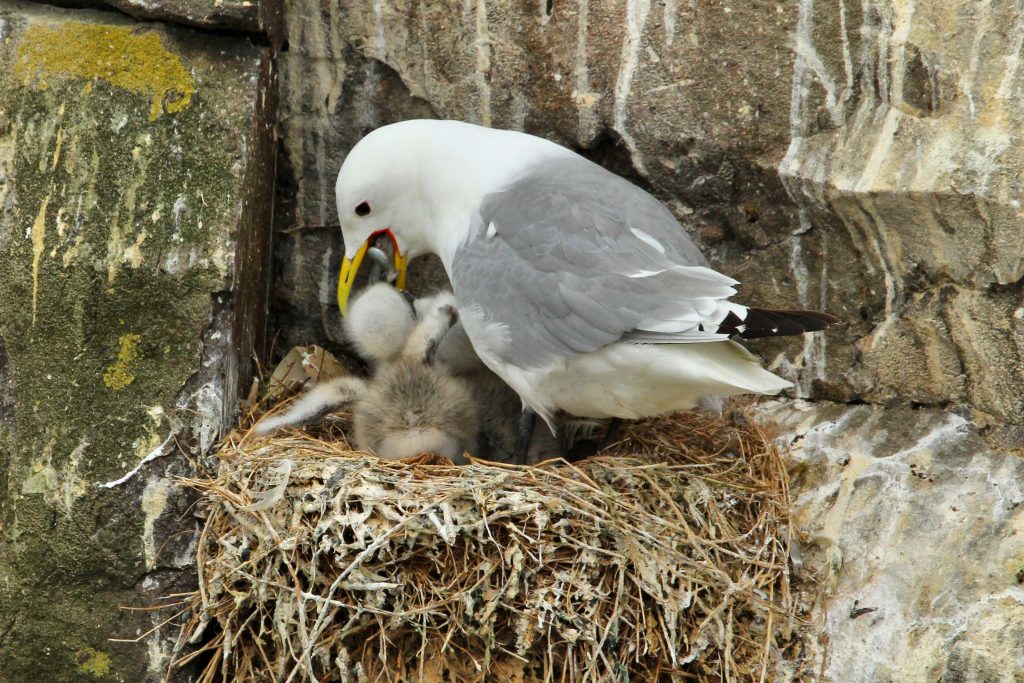
Kittiwakes are a Red-listed cliff-nesting species typically found in the north of the UK, and Sussex is toward the southern edge of their range. “This is the biggest colony on the south coast, and the only remaining one in the southeast,” explains Alison Giacomelli, a member of our Scientific Committee and the leader of our annual Kittiwakes survey.
We have been monitoring the Kittiwakes in Sussex since they first nested in the county in 1976. Initially nesting in Newhaven, they gradually moved to Seaford, with the majority nesting there beginning in 1996.
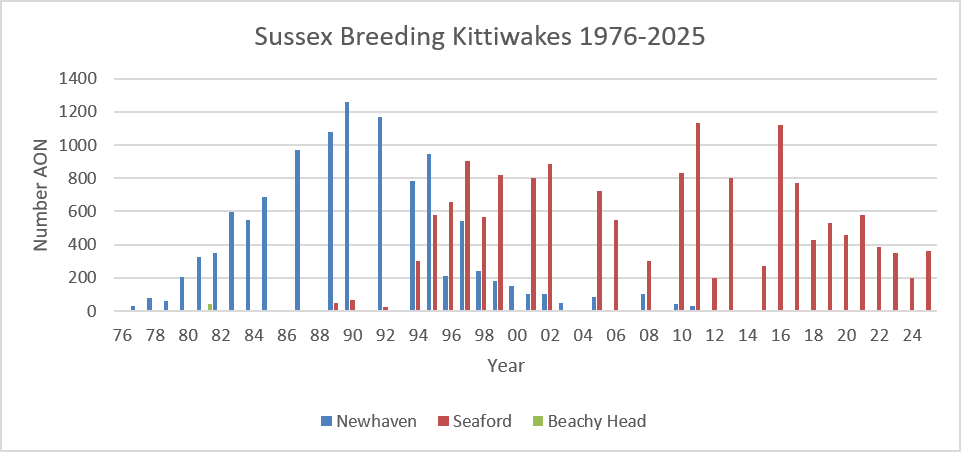
In 2016, when the Kittiwake population was declining at an alarming rate in southern England, this colony was one of only seven to buck that trend. Unfortunately, the last ten years have not been kind. In 2016, we recorded 1,120 nests in the colony. By 2024, we recorded only 202 nests. An increase to 364 nests in 2025 had given cause for optimism about the colony rebounding.
What happened this year?
The summer of 2026 brought record-breaking heatwaves to the UK. The Kittiwakes weathered the first heatwave in May, but based on the timing of the abandonment, we hypothesise that they were unable to withstand the second one in June.
“The south-facing chalk cliff must have been unbearable for them,” says Giacomelli. When she visited Seaford in mid-June, she had counted 200 nests – a promising start, given that the full colony would not have been visible from land. When she returned on the first of July for the official survey, accompanied by a representative of the South Downs National Park Authority and their drone pilot, the site was quiet, with no Kittiwakes on the cliff or nearby on the water.
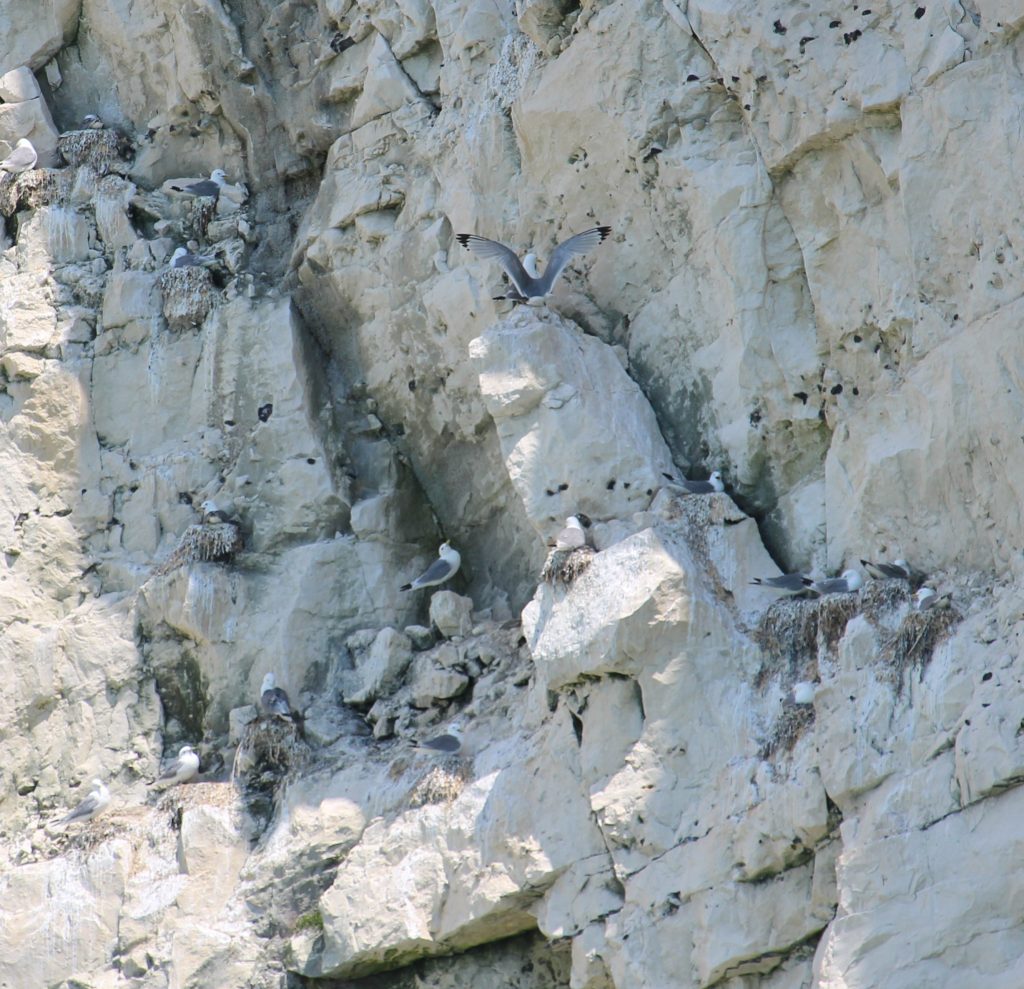
While Kittiwakes have also struggled globally with warming seas impacting the food web they rely on, given the timing, Giacomelli believes the most likely explanation for their departure is that the eggs did not survive the heatwave. This would have left the adults with no reason to stay.
What does this mean for the kittiwakes?
Kittiwakes raise only one brood a year. If nests fail, the adults cannot lay eggs again, and they would have gone out to sea to start their winter period early.
This species lives around twelve years, first breeding around age four, so a colony can withstand poor breeding years. “But this is now a colony that has lost an entire breeding year,” notes Giacomelli.
This year’s abandonment of this Kittiwake colony is a stark reminder of how populations struggle in the face of climate change. The Met Office recently conducted a rapid climate attribution study, concluding that the UK’s record-breaking mean temperature was made around 130 times more likely by human-induced climate change. Climate projections indicate that summer temperatures will continue to rise.
With warmer summers likely in the future, it remains to be seen whether the Kittiwakes will have better luck on the Seaford cliffs in the coming years. They are likely to visit again in future breeding seasons because of their site fidelity, says Giacomelli, while adding that it is also possible that they could avoid Seaford because of the catastrophe this season. “We’ll have to wait and see,” she says. “Here’s hoping for a better year next year.”