
News
Swift boxes and callers attract birds in droves in Worthing and Adur
The Worthing and Adur Swift Group has had a bumper season attracting Swifts with nest boxes and callers, partially funded by Sussex Ornithological Society (SOS). Their results show how local projects can help these Red-listed birds, and how groups in Sussex can access our funding to make a difference in their communities.
Swifts: an iconic species in jeopardy
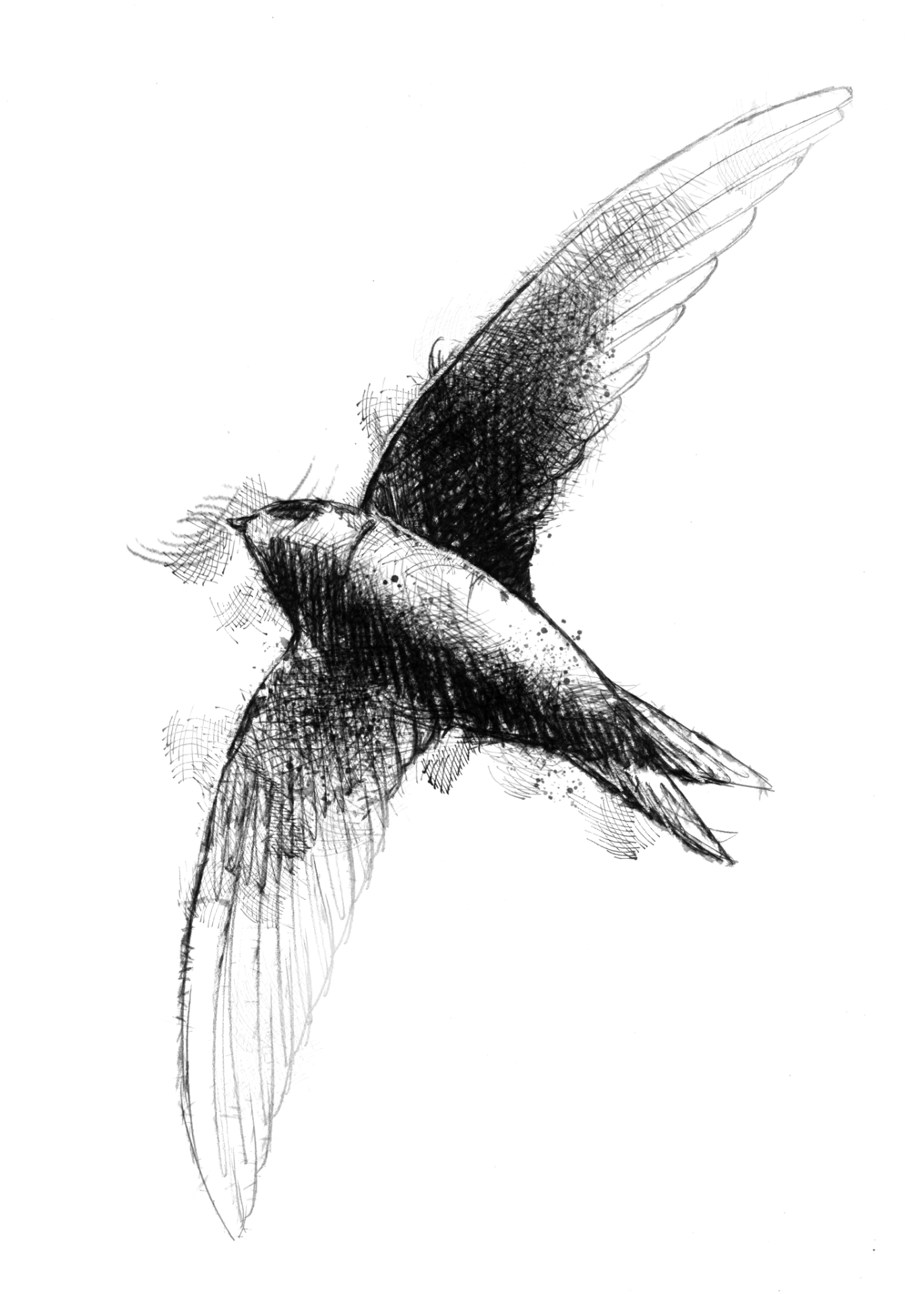
Swifts spend nearly their entire lives on the wing. They feed, drink and mate in flight, and are even believed to sleep while flying — closing off one part of their brains to rest while another part, still awake, keeps them aloft.
“They’re a really iconic bird because they nest in houses, so they have a proximity to humans that makes them very visible,” explains Dave Boddington, the Swift Champion at SOS. Their dependence on humans has made them vulnerable as our habits have changed — but it also means that we can take steps to protect them.
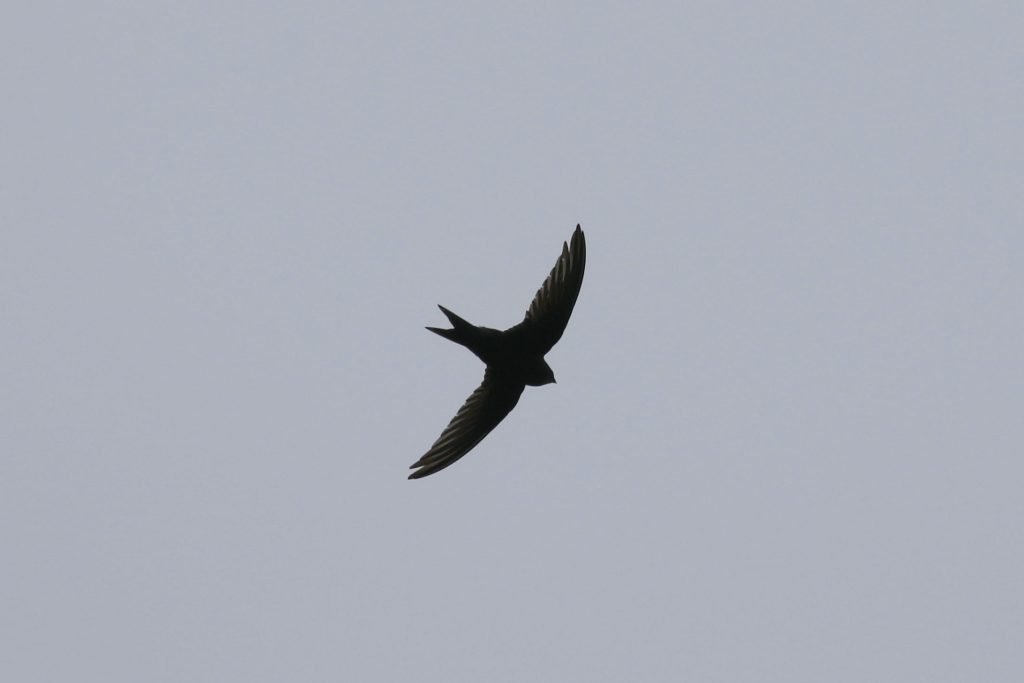
Swifts are now a Red-listed Bird of Conservation Concern, with their population crashing over the last few decades. As of the 2025 Breeding Bird Survey, they’ve experienced a 70% population decline in the UK between 1995 and 2024. Two major factors are believed to have had an impact on this:
- A lack of suitable nesting sites. Older buildings were more likely to have space under the eaves or small crevices in walls where Swifts could nest, while new buildings are designed for greater thermal efficiency and lack the nooks and crannies they seek. Additionally, many old nest sites have been lost due to the installation of new plastic fascia and soffit boards blocking their access.
- Changes to their food supply. Swifts are dependent on airborne insects. Pollution, pesticides, and climate change have impacted these insects, resulting in a shrinking food supply.
Nesting habits
Swifts start their first non-stop flight to sub-Saharan Africa at just six weeks old and often do not land again for two to three years. When they return to the UK, they do so in waves — first, experienced adults return to their favourite nesting sites; then younger birds return to build their first nests; then yearlings return to investigate colonies and prospect sites for future nests.
Once they’ve selected a preferred nesting site, adults will usually return to the same one every year. If their nesting site is moved or blocked, finding a new one can cost them an entire breeding season. This makes it tremendously important for them to have locations they can depend on.
Swift boxes and callers
This is where swift boxes come in: purpose-built boxes, ideally with a large internal cavity and an elongated entrance. Some can be placed under the eaves of existing buildings, and some — created with the same dimensions as a standard brick — can be built into the walls of new builds.
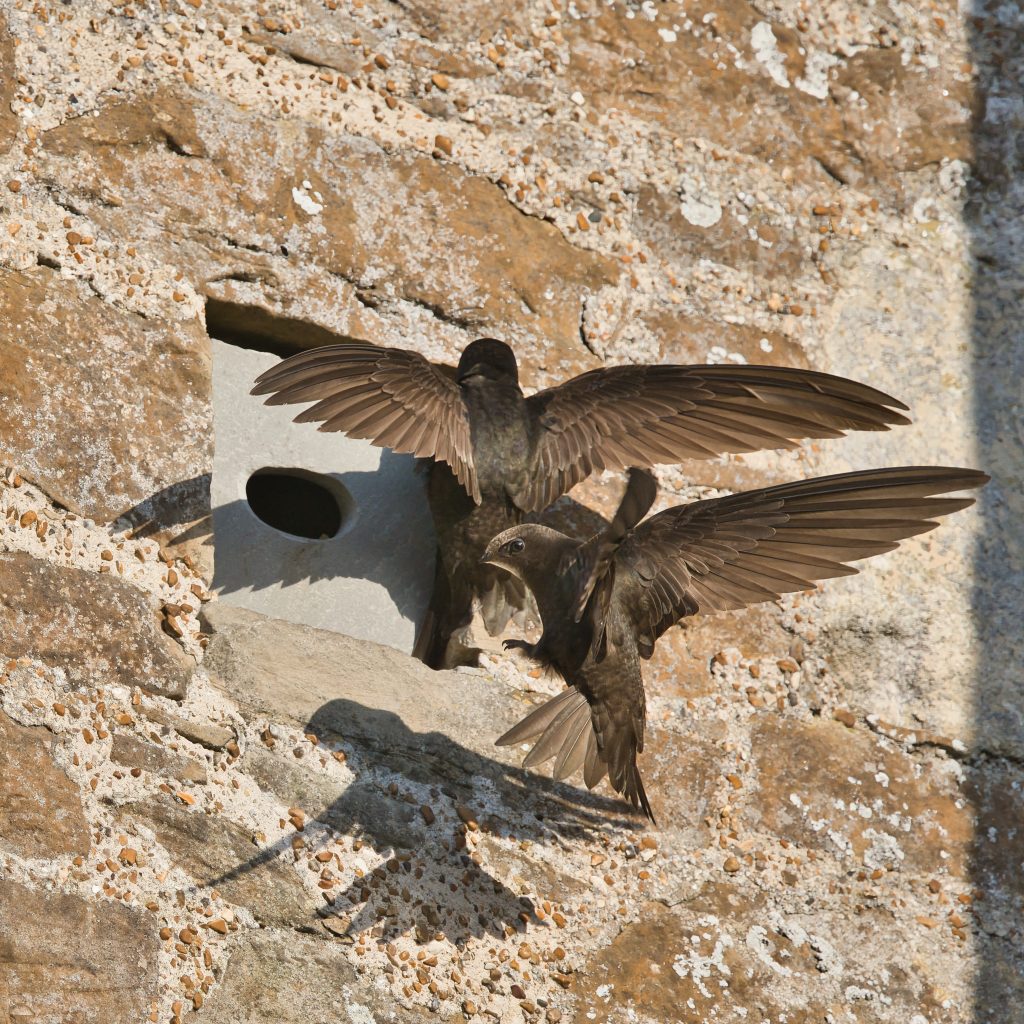
Once a box has been installed, a small speaker that emits swift calls, known as a caller, can also be installed to help the birds notice the box.
When local groups undertake projects to attract Swifts to their neighbourhoods, SOS can provide grants to help them install both swift boxes and callers, depending on their needs.
Successes of the Worthing and Adur Swift Group
In 2026, the Worthing and Adur Swift Group (W&ASG) has had great success with their swift boxes and callers. Homeowners paid for their own boxes and some callers, and 37 of their 57 callers were funded by SOS. Several boxes have already been earmarked by birds for occupation next year — and, since boxes without callers can remain unoccupied for many years and the boxes were installed only this year, this is an exciting result.
In their end-of-season report, the group shared heartening signs about their local Swift colonies:
- At a local church where a caller was retrofitted mid-season, Swifts soon began circling the tower for the first time in years.
- A group member filmed about a dozen prospecting Swifts “besieging” two boxes with a solar-powered caller a few weeks after their installation.
- A householder reported Swifts in her back garden within a day of her box and caller being installed.
- One caller led Swifts to start regularly entering not only the box with the caller, but also two neighbouring boxes. One bird carried feathers into a box, a promising sign of a young pair firmly claiming the box to return and breed next year.
Swift enthusiasts at W&ASG and SOS believe that the high proportion of caller-assisted boxes in the area will greatly accelerate occupation. The waves of young birds and yearlings that have visited the area this year will hopefully result in many young chicks in the years to come.
“We are highly appreciative of the support that SOS has given us this season,” says Steve Lawless of W&ASG. “It has definitely increased the effectiveness of our swift conservation work.”
Applying for SOS funding
If you are undertaking a project to benefit local birds, SOS can help. On our Grant Applications page, you can submit details about your project and its location, costs, and benefits through an online form. We’ll evaluate your project and follow up with you.
Funding local projects is a key part of our mission, and we’re delighted to assist with work that directly helps birds in Sussex.
Weekly Report: 5-11 October
Surprising, really, that almost nothing happened this week – it’s supposed to be the most exciting time of the year! Prevailing westerly winds are no doubt to blame…
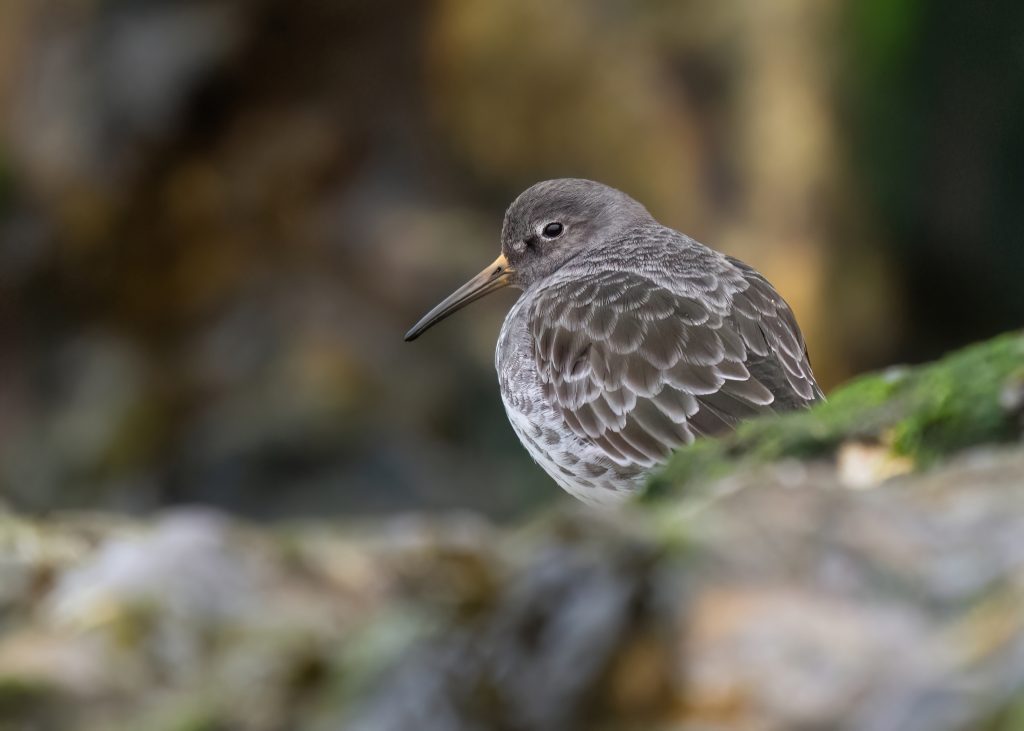
The American Golden Plover at Jury’s Gap continued to show in a stubble field near the sand pit and Spotted Redshank were still around at Pagham Hbr with a maximum of four again on 5th. A Purple Sandpiper was present again on 5th-6th on the eastern arm of Brighton Marina.
A Red-necked Grebe flew west off Selsey Bill on 9th.
Perhaps the highlight of the week was an impressive flock of 12 Common Cranes over Amberley Wildbrooks on 5th – interestingly the same flock had been noted over a site in Buckinghamshire earlier in the day. Four Spoonbill were at Rye Hbr on 6th and one was at Pagham Hbr on two dates (photo by Les Phillips taken on 6th attached). A Glossy Ibis was reported at Pulborough Brooks on 9th.
The Honey-buzzard season will be sadly over soon – one of last was seen flying over Amberley Wildbrooks on 5th.
Ring Ouzel were reported from Cissbury Ring (one on 5th), Beachy Head (two on 5th and 7th), Wild Park LNR (Brighton) on 10th and Hastings CP (two on 11th).
Weekly Report: 28 September-4 October
Bird of the Week has to be a superb juvenile Pallid Harrier found in a field near Littlehampton Golf Course on 3rd, although unfortunately it didn’t stay for very long. Osprey sightings have dwindled lately; there was one at Littlehampton on 28th , one (again) at Thorney Island on 2nd and another flying over Eastbourne on 4th. The good run of Short-eared Owl at Beachy Head continues with one flying in off the sea on 4th.
Last week’s Little Stint at Sidlesham Ferry was last seen on 1st when it appeared in the afternoon ahead of the rising tide. Others were found at Cuckmere Haven (a juvenile on the meanders on 28th) and at Rye Hbr on 2nd. A Purple Sandpiper was at Brighton Marina on 3rd and the American Golden Plover was observed almost daily near the sand pit at Jury’s Gap. Two Spotted Redshanks remained all week at Pagham Hbr and another was at Rye Hbr on 2nd; on the same day a bird was found on the Adur (just south of Botolphs) which was a good local record.
A Garganey was at Rye Hbr on 3rd.
There were two reports of Wryneck on 3rd, one in the Youth Hostel car park at Southease and the other at Rye Hbr. Plenty of Ring Ouzels were around with sightings of up to seven birds at Hastings CP on 2nd and nine at Beachy Head the following day. Two were at Steyning Round Hill on 2nd.
The first Yellow-browed Warbler of the autumn was caught and ringed at a private site in Sedlesham on 2nd and one was found the following day in the churchyard at Church Norton. Another was caught and ringed at Cissbury Ring on 4th.
It’s a good time now to come across migrating Woodlark and flyovers were duly noted at East Preston on 28th, Ferring Rife on 1st, Shinewater Park (Eastbourne) and Beachy Head on 2nd ,and West Dean on 3rd.
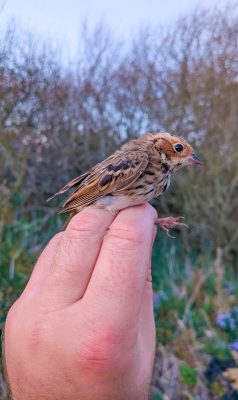
A rare Little Bunting was a surprise find in the ringing nets at Charlston Reedbed on 1st (photo by Jack Kellett attached).
October Birding Targets in Sussex – By Paul James
October is one of the most exciting months of the year for birding in Sussex. Autumn migration continues, with the departure of the last summer visitors and the arrival of the first true winter visitors, including Brent Geese, Redwings and Fieldfares.
Weather can have a major influence on what is found. South-easterly winds combined with overcast, damp or drizzly conditions can be particularly productive for Ring Ouzels, while also bringing birds from continental Europe and creating the potential for some of the year’s most exciting rarities. For the Sussex birder, almost any day in the field can produce a surprise.
This is the final article in the series, and October provides a fitting conclusion, with a combination of winter arrivals, visible migration, seawatching and the ever-present possibility of finding something unexpected.
Winter visitors arrive
One of the most noticeable changes during October is the arrival of our winter visitors. The first Dark-bellied Brent Geese will have already reached Sussex by the end of September, but numbers typically build through October as more birds arrive from their Arctic breeding grounds. Flocks of Brent Geese and other wildfowl can be seen moving along the coast before settling at sites such as Pagham and Chichester Harbours.
October is also the month when the first Redwings and Fieldfares begin arriving from Scandinavia. Listen for the thin, high-pitched calls of Redwings passing overhead, particularly at night.
Other winter visitors to look for include Brambling, Siskin and Redpoll, although numbers of these species can vary considerably from year to year. Early signs suggest that this could be the first autumn and winter period with plentiful beech mast since 2023/24. If that proves to be the case, there is hope for good numbers of Bramblings and other finches in the county’s beech woods.
Migrant passerines
Although many of the summer visitors have now departed, October can still produce a good variety of migrant passerines. Coastal bushes, hedgerows and areas of scrub should be checked carefully, particularly during periods of suitable weather.
Blackcaps and Chiffchaffs remain among the commonest migrants, with birds continuing to move through Sussex well into the month. Firecrests, Goldcrests and continental Robins can also be encountered in suitable cover, while Black Redstarts, Stonechats and Wheatears are worth looking for in open areas along the coast and on the Downs.
October is also a particularly good month for Yellow-browed Warbler. These tiny Siberian migrants are regular autumn visitors to Sussex, albeit in lower numbers than on the east coast. Coastal sites such as Beachy Head, Seaford Head and Pagham Harbour are all capable of producing birds. Their distinctive, high-pitched call is much easier to detect than the birds themselves, so learning the call is highly recommended.
Ring Ouzels
October is potentially one of the best months of the year to look for Ring Ouzel in Sussex as birds pass through the county on their autumn migration.
South-easterly winds combined with overcast, damp or drizzly weather can be particularly favourable, with birds settling temporarily to forage in areas of rough grassland, short turf, scrub and scattered bushes.
Beachy Head and Cissbury Ring are the obvious places to try, but other suitable areas of downland should not be overlooked. Ring Ouzels can be surprisingly elusive, so scanning carefully from a vantage point is often more productive than simply walking from bush to bush.
Migration spectacles
October can provide some impressive visible migration as birds continue to move along the Sussex coast and Downs. Large flocks of Brent Geese may pass westwards close inshore, while on suitable mornings visible migration watches at places such as Beachy Head and Fairlight Country Park can produce a steady stream of birds moving along the coast. Chaffinches, Goldfinches, Linnets, Redpolls, Siskins, Meadow Pipits and Skylarks can all feature, with the composition of the movement varying according to the weather and wind direction. Scarcer species such as Brambling and Woodlark are also possible.
Seawatching
October can be an exciting month for seawatching, particularly when strong winds develop. As seabirds move through the Channel, autumn gales can bring birds close to shore and provide opportunities for species that are otherwise difficult to see from land.
Balearic, Manx and Sooty Shearwaters, along with Arctic and Great Skuas, are key targets. Exposed viewpoints such as Selsey Bill, Splash Point, Cow Gap and Langney Point are worth checking when conditions are favourable.
Scarcer species including Grey Phalarope, Leach’s Storm Petrel and Sabine’s Gull are among the other possibilities, particularly after severe gales.
It is worth remembering, however, that October seawatching can be hard work. Long periods of apparently empty sea are inevitable, but perseverance can occasionally be rewarded spectacularly.
Raptors
October sees the return of Hen Harriers and Merlins to Sussex, where they spend the winter hunting over areas of open downland and the various river valleys that cut through the Downs.
The Burgh, near Burpham, is an often reliable site for both species, while other possibilities include Amberley Wildbrooks and Pulborough Brooks in the Arun Valley.
There have already been a number of sightings of Short-eared Owls at coastal sites such as Beachy Head, Seaford Head and the Selsey Peninsula this autumn. Further sightings are likely at these locations throughout October as more birds arrive from the continent to spend the winter in the UK.
Rarities
October is potentially one of the most exciting months of the year for finding a rarity in Sussex. The county’s position on the south coast means that birds displaced from continental Europe and further afield can turn up, particularly following periods of easterly or south-easterly winds when they may make landfall along the Sussex coast.
Coastal bushes, gardens, sheltered valleys and areas of scrub should all be checked carefully after suitable weather. Dusky Warbler, Pallas’s Warbler, Radde’s Warbler and Little Bunting are among the possibilities that can generate considerable excitement.
Better still would be a twitchable Olive-backed Pipit or Red-flanked Bluetail, both of which have occurred previously in Sussex in October, but unfortunately none of the previous records has lingered long enough to give local birders a realistic chance of seeing them.
Tips for October Birding
• Check the weather: Easterly and south-easterly winds can bring migrants, including Ring Ouzels, as well as rarities from continental Europe. October is a prime month for something genuinely unexpected to turn up.
• Watch the skies: Visible migration can produce large movements of finches, pipits and Skylarks, particularly along the coast and Downs.
• Keep seawatching: Autumn gales can bring shearwaters, skuas and other scarce seabirds within range of the Sussex coast.
• Check suitable cover: Coastal bushes, scrub, gardens and sheltered valleys can all hold migrant passerines and, occasionally, something much rarer.
October offers an excellent finale to the birding year and to this series. With winter visitors arriving, migration still in full swing and the possibility of a Sussex rarity around almost every corner, there is every reason to get out birding and see what the month can produce.
Weekly Report: 21-27 September
Rather a quiet week with nothing much out of the ordinary, although the American Golden Plover was found again near the sand pit at Jury’s Gap on 25th and 27th. A Little Stint was at Sidlesham Ferry on 26th-27th and a juvenile Curlew Sandpiper was seen again at Cuckmere Haven on 24th and 26th. A Spotted Redshank was at Flat Beach (Rye Hbr) on 24th and whilst there were generally fewer sightings of them at Pagham Hbr, four were still present on 21st.
A Caspian Gull was at Church Norton on 24th on a day when Selsey Bill saw its first returning Brent Geese. On 22nd there were at least two Spoonbill on the meanders at Cuckmere Haven and perhaps the same birds were observed flying west over Seaford Head in the late afternoon. Two flew over Weir Wood Res the following day and six were at Castle Water (Rye Hbr) on 26th.
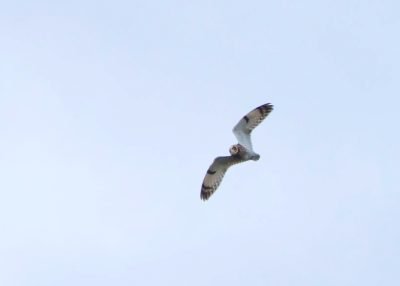
It was a great week at Beachy Head for Short-eared Owl with three seen in five days (photo of one on 26th by Laurence Pitcher attached). A juvenile Honey-buzzard flew out to sea there on 21st. An Osprey was again at Thorney Island on 22nd and another flew over Weir Wood Res on 23rd.
Reports of Pied Flycatcher came from Seaford Head on 21st, East Preston on 22nd and Goring on 23rd.
Beachy Head had Grasshopper Warbler on 25th and 26th and one at The Severals (Church Norton) on 25th was the latest recorded on the Selsey peninsula this century.
Surveyors needed urgently for Stedham & Iping Commons (2027 Survey)
We are seeking surveyors for the Stedham & Iping Commons (SU852219) for the 2027 Wealden Heaths Breeding Bird Survey.
This long running survey monitors several breeding species with the emphasis on heathland specialists (Nightjar, Woodlark, Dartford Warbler, Tree Pipit and Stonechat) by the simple method of detecting males holding territory. The core 10 heaths have been surveyed for 27 years.
There are five priority species, and other species can be noted.
The Survey starts in mid-February (to find the Woodlarks taking up their territories) and carries on until late June. We try to cover the individual sites entirely on at least four occasions, including the one early year visit, and two visits (more if you have the inclination and the time) about two weeks apart during May when song activity is at its peak. There will be at least one evening visit in late May or preferably June to detect Nightjar.
The survey is not demanding and the continuous nature of it over more than 27 years has enabled us to providing excellent trends data. They survey is important for the input we are able to give on management issues to the owners and managers of the sites.
If you are interested or would like any further information please contact Alison Giacomelli Alison.Giacomelli@naturalengland.org.uk or Alan Perry on aledgehill@outlook.com tel. 07796 147234.
SWT Eastbourne Regional Group Event
SWT Eastbourne’s SEPTEMBER illustrated talk is by Ken & Linda Smith on ‘LESSER SPOTTED WOODPECKERS: ARE THEY HIDING IN PLAIN SIGHT?’ Ken & Linda are the UK’s leading woodpecker experts, and will share what we know of them and how Passive Acoustic Monitoring is helping to discover more about these elusive birds.
Details:
Thursday 24th September 2026, 7.30pm to 9.30pm
Venue:
The talk will be in the Victoria Baptist Church, Eldon Road, Eastbourne, BN21 1UE, starting at 7.30pm, where there is a large, free, car park (the talk will not be recorded or broadcast online).
(TQ 594002) (what3words ///types.flames.pace)
Everyone is welcome – there is no need to book a ticket, please just come along!
Please also note that entry is by cash only, as we do not have access to any electronic payment system: £5 for entrance. Tea/coffee & biscuits in the break.
Any queries to: Janet Nott, Secretary, SWT Eastbourne Regional Group, secretary.swteastbourne@gmail.com
Weekly Report: 14-20 September
That distant, unidentified harrier over Beachy Head I mentioned last week might well have been the very same Pallid Harrier found over fields east of Findon on 14th. A fair number of people managed to see it since it was still roaming around there the next morning, although it shifted away to Steyning later in the day. A Pallid Harrier was reported on the 17th at West Rise Marsh (Eastbourne), and an adult female Hen Harrier was over Steep Down on 19th.
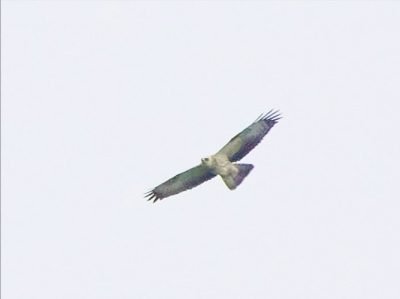
A nice-looking pale juvenile Honey-buzzard was over Arlington Res on 15th and presumably the same bird was seen again a little later migrating out to sea at Beachy Head (photo by Laurence Pitcher attached). Actually it’s been a good autumn for them on the headland there – according to beachybirder this was the 15th individual so far!
Osprey was noted almost daily at Pagham Hbr and Thorney Deep had one again on 16th and 19th with two present on 20th.
Seawatching at Selsey Bill was rather low key although two Balearic Shearwaters went west on 14th and a Great Northern Diver going east on 18th was the second earliest autumn bird this century. A Little Gull flew west on 20th.
The two Little Stints at Sidlesham Ferry were present until 15th , where a Grey Phalarope was found on 19th. At Pagham Hbr there were up to five Spotted Redshank daily and a Curlew Sandpiper on 14th-15th, with two present on 18th. A Wood Sandpiper was at Weir Wood Res on 14th and the American Golden Plover at Jury’s Gap was found again on 19th. The Red-necked Phalarope at West Rise Marsh was still present on 16th.
There was clearly a significant passage of hirundines midweek with two huge swarms of Swallows (totaling roughly 20,000 birds) going south over the Adur at Passie’s Pond on 15th and equally spectacular sightings of House Martin (at least 10,000 birds) over the cliffs at Beachy Head the following day. Exceptional numbers of hirundines were also noticed offshore at Selsey Bill on 16th on a day when nearby Medmerry saw a “continuous westerly movement” (https://selseybirder.blogspot.com/).
The Hooded Crow at Bulverhythe (Hastings) was seen again on 18th at the waste recycling site. A Hawfinch flew over Hastings CP on 15th.
A Walk Around Arlington Reservoir, with Sand Martins, House Martins, and Spotted Flycatchers
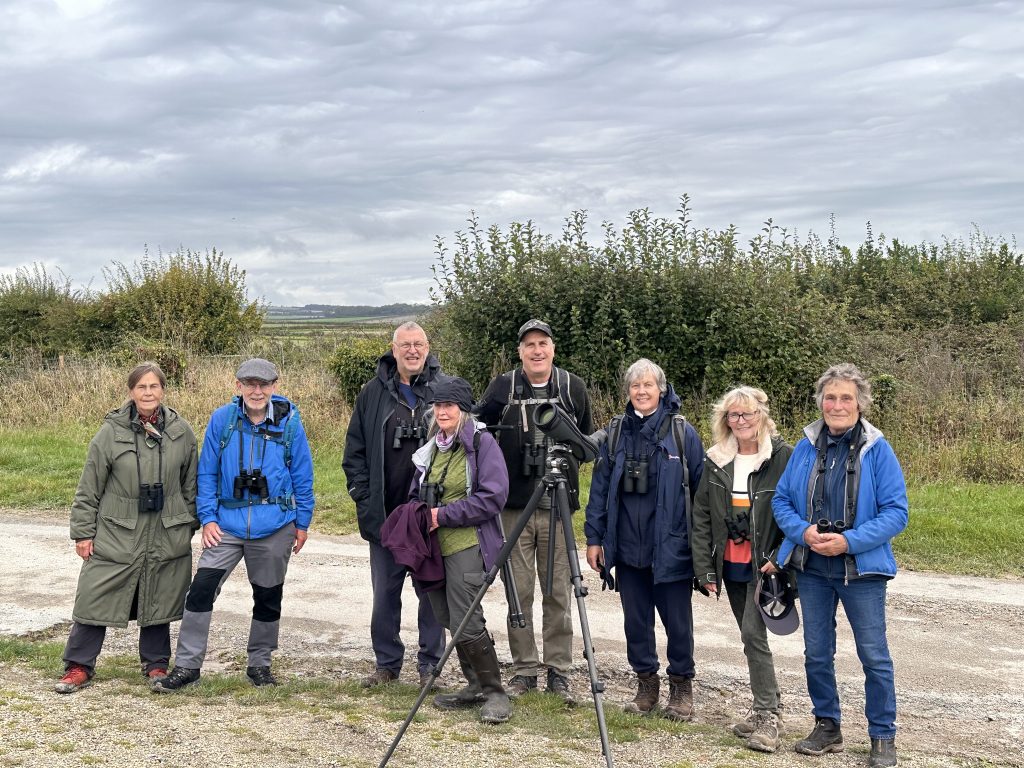
About 25 members gathered for a Sunday morning stroll around Arlington Reservoir, a 5km walk that included a detour over the River Cuckmere. The weather forecast indicated wet periods, but the precipitation was minimal for a short period. The event was led by Mark Wright who recorded 34 species, the full list of which can be found in our Recent Sightings.
There were significant numbers of hirundines (mainly Sand Martins but some House Martins) feeding up before their journey south.
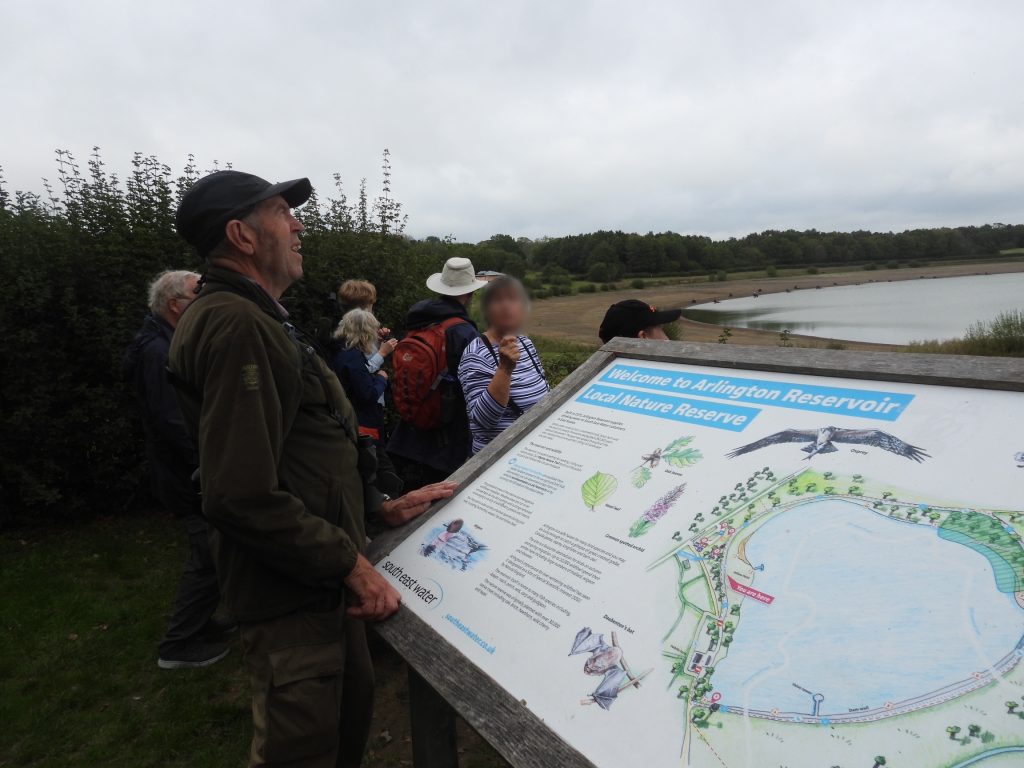
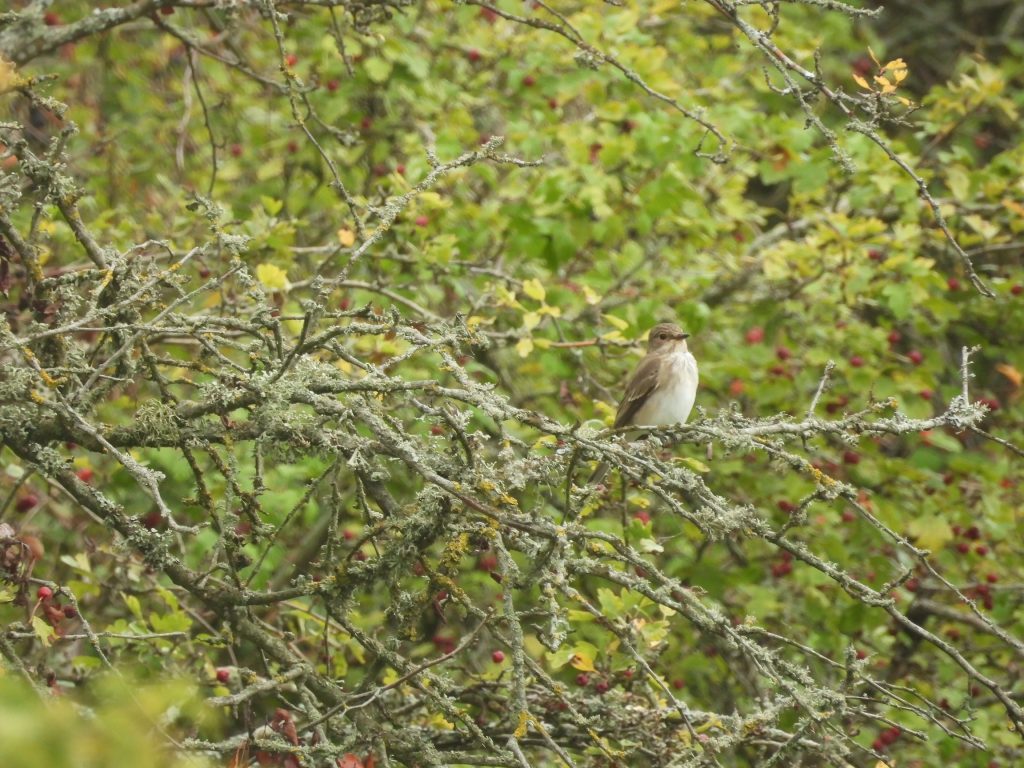
The star birds of the day were a party of Spotted Flycatchers, three or four, obligingly sitting still between catches, in the field borders near the village of Arlington.
Check out the walks schedule on our Events page for more autumn birding around the county, including walks in these locations:
- West Rise Marsh, Eastbourne
- Birling Gap, East Dean
- Cissbury Ring near Worthing
- Cuckmere Haven
- Selsey/Church Norton
- Dell Quay Fishbourne
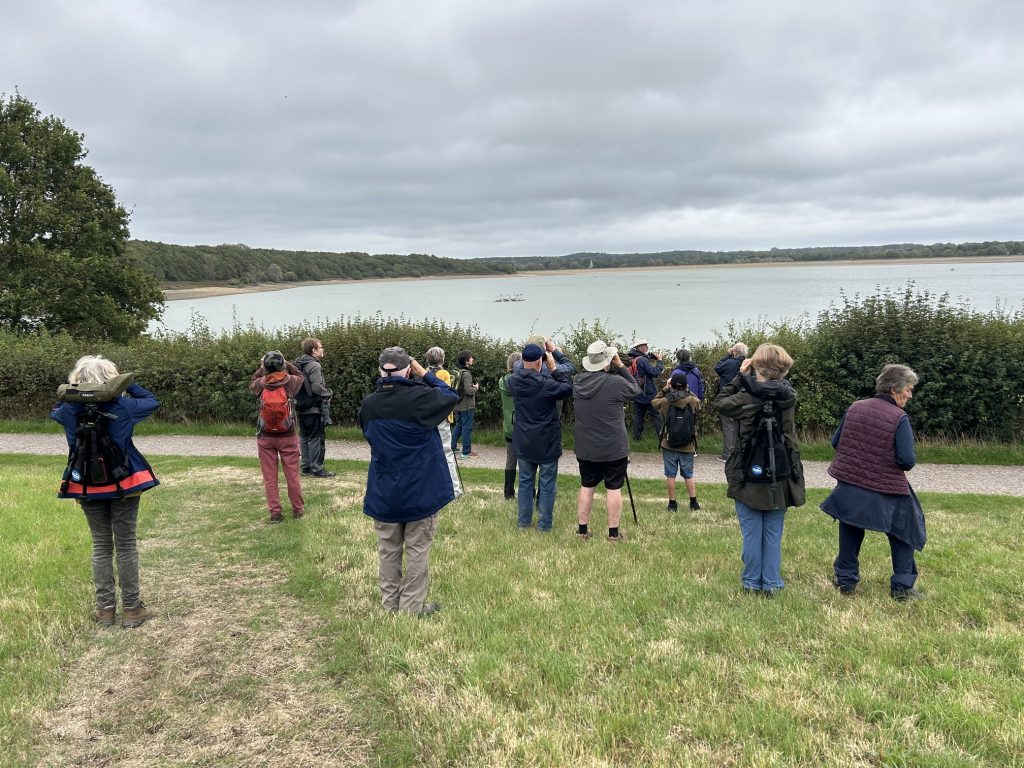
All photos by Jonathan Cook.
Kittiwake Colony Abandons Seaford Site During Summer Heatwave
The colony of Kittiwakes nesting at Seaford abandoned their nests during the June heatwave this summer, with the population present in mid-June vacating before the first of July. We hope to see the Kittiwakes return in future years, though rising summer temperatures might not bode well for the colony.
Colony history
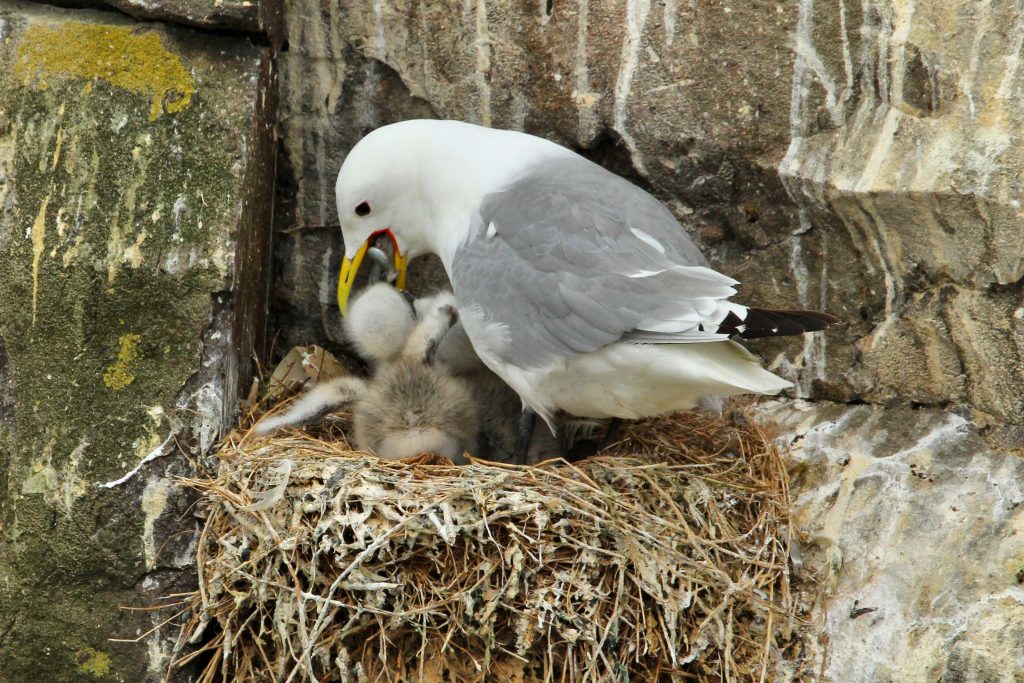
Kittiwakes are a Red-listed cliff-nesting species typically found in the north of the UK, and Sussex is toward the southern edge of their range. “This is the biggest colony on the south coast, and the only remaining one in the southeast,” explains Alison Giacomelli, a member of our Scientific Committee and the leader of our annual Kittiwakes survey.
We have been monitoring the Kittiwakes in Sussex since they first nested in the county in 1976. Initially nesting in Newhaven, they gradually moved to Seaford, with the majority nesting there beginning in 1996.
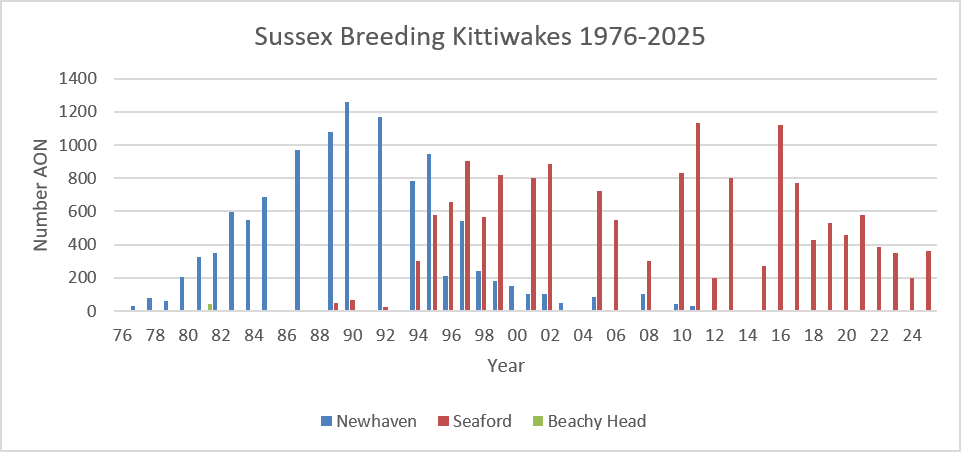
In 2016, when the Kittiwake population was declining at an alarming rate in southern England, this colony was one of only seven to buck that trend. Unfortunately, the last ten years have not been kind. In 2016, we recorded 1,120 nests in the colony. By 2024, we recorded only 202 nests. An increase to 364 nests in 2025 had given cause for optimism about the colony rebounding.
What happened this year?
The summer of 2026 brought record-breaking heatwaves to the UK. The Kittiwakes weathered the first heatwave in May, but based on the timing of the abandonment, we hypothesise that they were unable to withstand the second one in June.
“The south-facing chalk cliff must have been unbearable for them,” says Giacomelli. When she visited Seaford in mid-June, she had counted 200 nests – a promising start, given that the full colony would not have been visible from land. When she returned on the first of July for the official survey, accompanied by a representative of the South Downs National Park Authority and their drone pilot, the site was quiet, with no Kittiwakes on the cliff or nearby on the water.
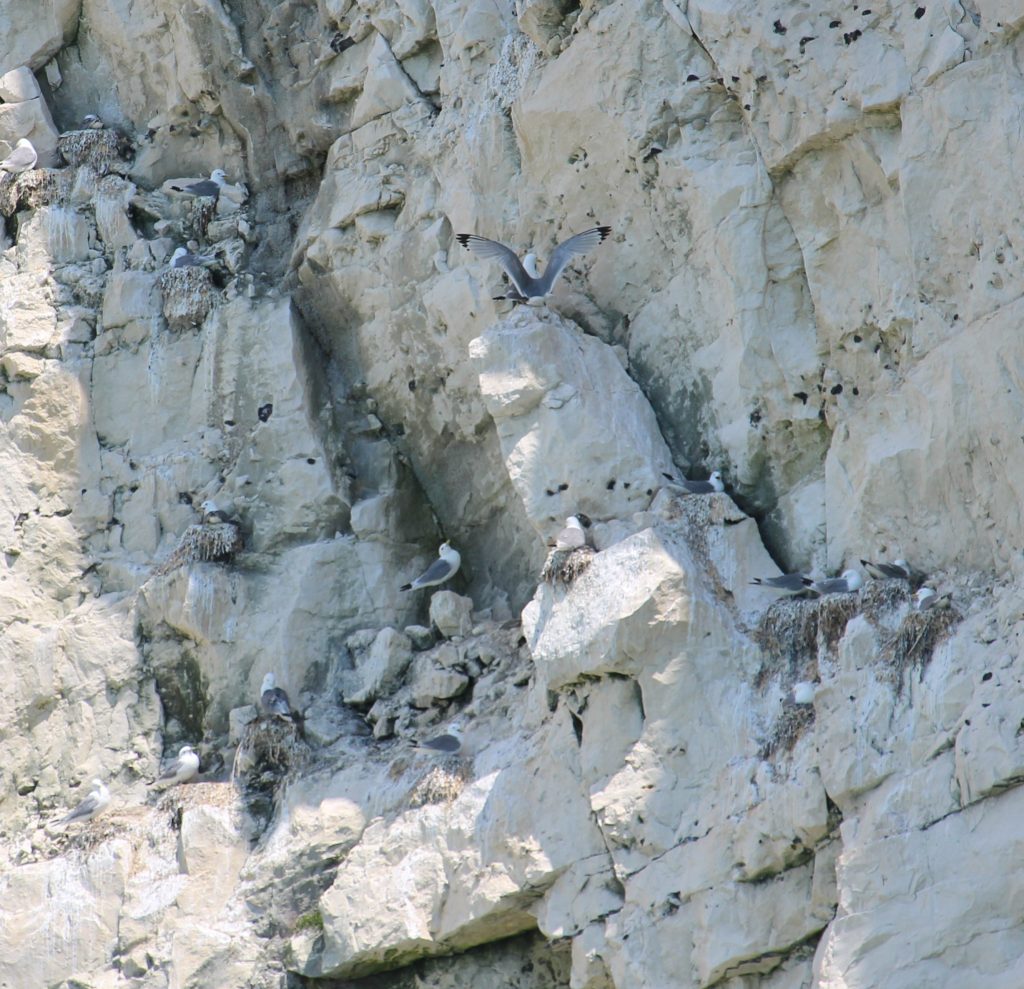
While Kittiwakes have also struggled globally with warming seas impacting the food web they rely on, given the timing, Giacomelli believes the most likely explanation for their departure is that the eggs did not survive the heatwave. This would have left the adults with no reason to stay.
What does this mean for the kittiwakes?
Kittiwakes raise only one brood a year. If nests fail, the adults cannot lay eggs again, and they would have gone out to sea to start their winter period early.
This species lives around twelve years, first breeding around age four, so a colony can withstand poor breeding years. “But this is now a colony that has lost an entire breeding year,” notes Giacomelli.
This year’s abandonment of this Kittiwake colony is a stark reminder of how populations struggle in the face of climate change. The Met Office recently conducted a rapid climate attribution study, concluding that the UK’s record-breaking mean temperature was made around 130 times more likely by human-induced climate change. Climate projections indicate that summer temperatures will continue to rise.
With warmer summers likely in the future, it remains to be seen whether the Kittiwakes will have better luck on the Seaford cliffs in the coming years. They are likely to visit again in future breeding seasons because of their site fidelity, says Giacomelli, while adding that it is also possible that they could avoid Seaford because of the catastrophe this season. “We’ll have to wait and see,” she says. “Here’s hoping for a better year next year.”