
Weekly Report: 27 July-02 August
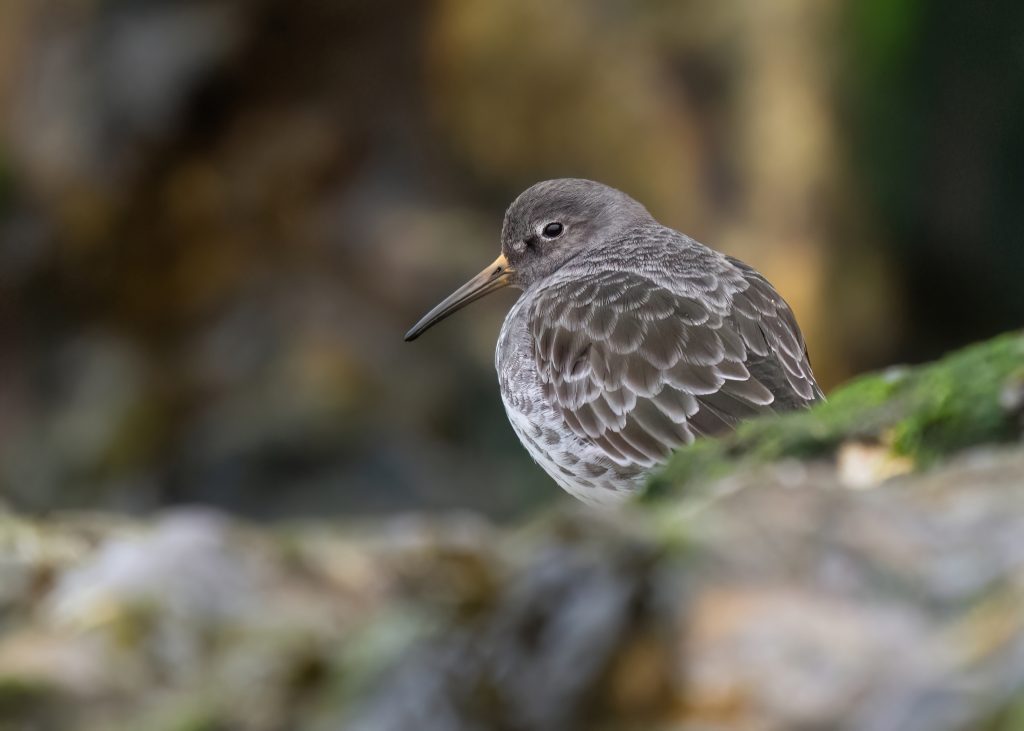
The week got off to a great start on Monday morning with a Stone-curlew on the beach at Goring Gap, although it couldn’t be relocated after it was seen flying off towards the Sea Lane Cafe. On the same day the two Wood Sandpipers at Pett Level were again present, with singles noted there on 29th and 31st. During the week up to five Spotted Redshanks were seen, on and off, at the Breech Pool (Pagham Hbr).
A Goshawk flying over Pagham Hbr was an excellent local record – only the second this century after a bird in August 2022 (https://selseybirder.blogspot.com/).
Singing Quails were again reported from Chantry Hill with two birds on 27th and one the following day.
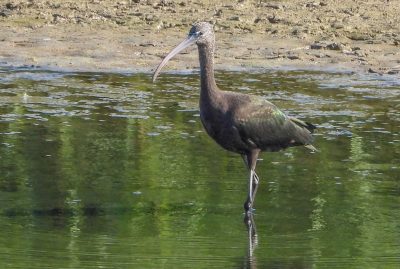
The Glossy Ibis performed well until 1st at Pagham Hbr where it roosted each evening at Owl Copse (photo attached by Andrew House taken on 31st). It was accompanied on 27th and 28th by a Spoonbill.
On 27th there was a Pied Flycatcher at Graffham Common and another at Lancing Ring. 75 Hawfinches were counted at West Dean Woods in the early morning of 30th, a record count for Sussex in July-August.
Weekly Report – 20-26 July
There’s a feel of autumn now as the numbers of Willow Warblers, Yellow Wagtails and other migrants begin to build along the coast. There was a rarity as well this week with a Pectoral Sandpiper at Pett Level on 23rd and also the following day when it was accompanied by a Wood Sandpiper (two of which were there on 26th). A Curlew Sandpiper was on the east side of Pagham Hbr on 20th and up to four Spotted Redshanks continue to show regularly at the Breech Pool nearby.
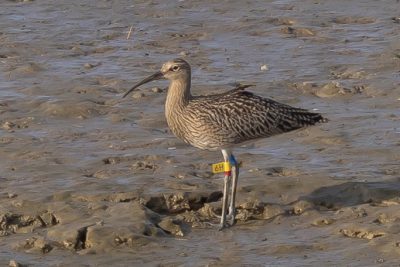
On the subject of waders there was an interesting record of a Curlew, colour-tagged ‘6H’, standing on the mud opposite Town Quay (Shoreham) on 23rd (photo attached by David Park). This is surely a bird from the Duke of Norfolk’s estate at Burpham where a head-starting project is aiming to reintroduce Curlews to the South Downs. It’s the third such individual to have been sighted on the Adur at Shoreham (the others tagged ‘N0’ and ‘P0’).
The pair of Ruddy Shelduck reported last week was still present at Pett Level until 24th.
A juvenile Black Tern was at Rye Hbr on 25th-26th and an adult Roseate Tern was offshore there in the early morning of the 22nd. There was a report of a Little Tern briefly inland at Weir Wood Res on 24th. A Little Gull was at Rye Hbr on 22nd and there were two present on 24th.
A Glossy Ibis was found in the late afternoon of 23rd at the Breech Pool (Pagham Hbr) – it was subsequently seen coming to roost on the two days following. Singing Quails were reported on the South Downs at Chantry Hill on 24th and Kithurst Hill on 25th.
An Osprey flew west over Hickstead on 25th.
Weekly Report: 13-19 July
Although there were no great rarities this week it did feel a tad livelier as we edge slowly into autumn. A pair of Ruddy Shelduck was an unusual sight at Pett Level on 14th with both birds still present on 19th. Also at Pett were Spoonbills (three on 14th and two on 16th) and a Wood Sandpiper on three dates. Another Wood Sandpiper (along with a Curlew Sandpiper) was at Rye Hbr on 18th. Up to three Spotted Redshank are still being seen at the Breech Pool (Pagham Hbr).
A Quail was reported singing from a commercial food crop on Lancing Ring on two consecutive evenings.
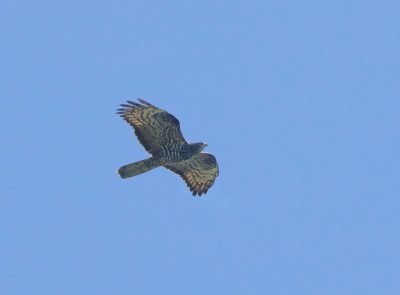
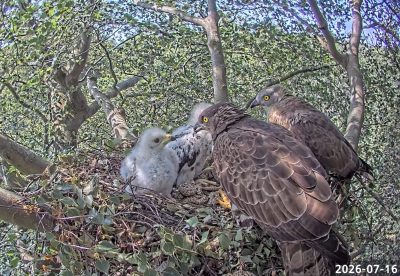
An Osprey was on the mudflats at Thorney Island on 18th and there was another at Medmerry RSPB the following day. Talking of raptors it’s been fascinating to follow the progress of the pair of Honey-buzzards and their two fast-growing chicks on the well-publicised webcam which the SOS is very much involved in. The attached photo comes courtesy of Wildlife Windows and the nest can be viewed at the following link: https://www.youtube.com/watch?v=wGIRKeZn3vM
Two Little Gulls were at Rye Hbr on 18th along with three Black Terns. One of the terns was a juvenile on the Salt Pool which was still present the following day. It was encouraging to hear that there were at least 60 Little Terns at Pagham Spit on 17th, half of which were juveniles.
An early Whinchat at Birling Gap on 19th was a nice sign of autumn passage and on the same day a Serin flew over Snowhill Creek (West Wittering).
Weekly Report: 6-12 July
A quiet week again, unsurprising really for mid July. The only sniff of a rarity was an unconfirmed report of a Lesser Yellowlegs at Rye Hbr on 7th. The more usual early autumn waders were on show with Wood Sandpipers at Pulborough Brooks again (three on 8th) and Spotted Redshanks at Pagham Hbr (up to three at the Breech Pool) and Cuckmere Haven (one on 9th. )
Three Sandwich Terns were found inland, fishing off the dam at Weir Wood Res on 8th, and an impressive total of 34 recently fledged Little Terns was counted on 9th at Pagham Hbr. Roseate Terns continue to be noted there with up to three birds mingling with the other terns on the mudflats.
Four Spoonbills were at Rye Hbr on 11th and a Quail was heard singing from a cereal field at Steepdown (Lancing) on 9th.
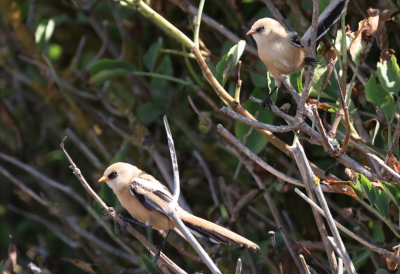
Nice to see that recently fledged Bearded Tits have been seen at the far eastern end of the county at Scotney (photo by Martin Casemore attached). Two Hawfinches flew over Knepp Castle Estate on 8th.
Weekly Report: 29 June-05 July – David Thorns
The week got off to a promising start with a group of six Bee-eaters flying southwest over Ninfield on Monday evening, although unfortunately they were not seen again.
There were more reports of Quail with singing males at The Burgh on 29th and Chantry Hill on 3rd. Four were at Southwick Hill on 2nd with two reported again the following day.
Some Swifts and Sand Martins appear to be already migrating and returning wader passage was in evidence with the first Green and Common Sandpipers of the autumn appearing inland at Weir Wood Res on 29th ,and there were Wood Sandpipers at Pulborough Brooks on 30th and 1st.
Last week’s Osprey at Arlington Res presumably remained a while since one was there catching fish on 30th and again the following day when there was possibly a second bird present.
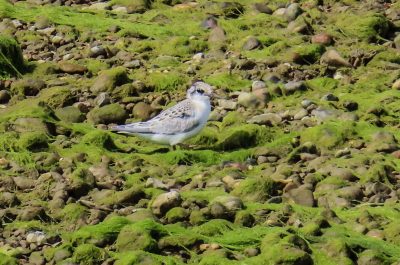
Roseate Terns were observed once more at Church Norton with two on the mudflats on 2nd. There were encouraging signs of successful breeding for the Little Terns in that area with the Selsey Blog reporting at least a dozen fully fledged young flying around at the end of Pagham Spit with more young out on the mud further down the harbour (photo by Andrew House attached).
There were equally encouraging signs for Hawfinch with at least 30 flying over the Monkton Track (West Dean) in the early morning of 29th with around 13 birds feeding on site. Two flew over Ebernoe Common on 3rd.
Weekly Report: 22-28 June
This was another rather quiet week with not a lot to report…typical June. It was too hot to go out birding anyway, an intense heatwave hanging over western Europe causing record monthly temperatures here and in many other European countries.
Nevertheless with the first signs of return passage already underway there were a few things around, notably at Pagham Hbr where Wood Sandpipers were at the Breech Pool on 24-25th and again on 27th when a Green Sandpiper was also present.
Roseate Terns keep on appearing at Church Norton – there were two there on the mudflats on 22nd.
Up to five Honey-buzzards were observed from the Llama Park viewpoint on the Ashdown Forest and it was fascinating to continue watching the breeding pair at a different site on the webcam – the first chick appeared on Tuesday and a second hatched two days later. An Osprey was at Arlington Res on 28th.
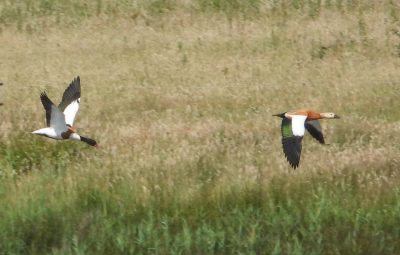
A singing Quail was heard in the evening of 27th at Scotney Gravel Pits and a Ruddy Shelduck put in a brief showing at Sidlesham Ferry Pool on 25th before it was chased off by a Shelduck (photo by Adrian Haines attached).
Easily the best bird this week though was a singing Common Rosefinch: although it couldn’t be seen this must have been an exciting find, the bird’s distinctive whistled song emanating from the paddocks east of Pett Village early in the morning of 25th.
Weekly Report: 15-21 June
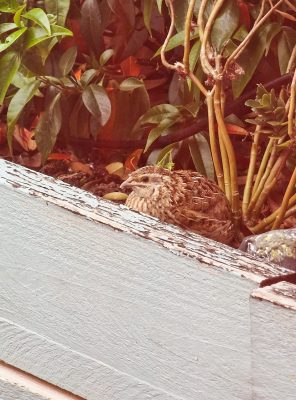
It’s been a great year so far for Quail in the UK and we’ve had our fair share here in Sussex with numerous reports of singing males. They’re tricky so-and-sos to see though (almost all records are of “heard-only” birds) so it was a nice surprise to be given the attached photo, taken by Paula Morris, of a female nicely snuggled up on the edge of a garden in Pevensey Bay on 20th. Other records of Quail this week came from Beachy Head on 15th and Streat Hill Farm (Plumpton) on 20th.
The rarest bird this week was a superb 2cy male Red-footed Falcon which graced the fields near the Castle Hill NNR at Newmarket Hill (Woodingdean) on 15th. After posing obligingly for photographs, however, he unfortunately disappeared away to the north, not to be seen again.
Church Norton is clearly the best place to try and see a Roseate Tern these days – a bird is still being reported, on and off, roosting on the mudflats and was noted on four dates.
Two Little Gulls were at Rye Hbr on 15th and a Caspian Gull was at Pagham Hbr on the same day.
About 20 Hawfinches were at Sherwood Rough (nr Arundel) on 15th including several recently fledged juveniles.
Weekly Report: 8-14 June
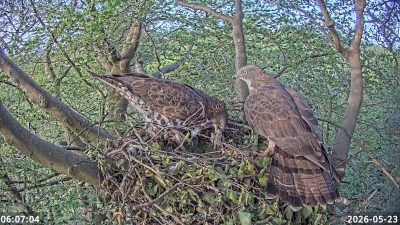
The focus this week was very much on Honey-buzzard: Sussex is by far the best county in the UK for this wonderful species, something broadcast enthusiastically to the nation throughout the week by Chris Packham on the BBC’s Springwatch. A nestcam has been erected at one site (funded in part by the SOS) and the breeding pair can now be watched via the following link: https://sos.org.uk/about/our-work-with-people/surveys/honey-buzzards/
A photo of the birds is attached, courtesy of Wildlife Windows.
This aside, there really wasn’t much to write home about: a female Hen Harrier was seen off the South Downs Way at Southease on 13th and singing male Quail were found at Sidlesham on 9th, the Burgh (nr Amberley) on 10th and Pagham Hbr on 12th.
It was relatively quiet at Selsey Bill although a Little Gull flew west on 11th and up to three Roseate Terns continue to be seen at Church Norton nearby (noted on four dates).
A Hawfinch was a surprise find in a garden at Bexley Hill (Petworth) on 11th.
Weekly Report: 1-7 June
Although things got off to a cracking start with a Night Heron (sound-recorded over Hastings in the early hours of Monday) it was generally quiet with few birds of note. Gale force southerly winds towards the end of the week produced some worthwhile conditions for seawatching though: Manx Shearwaters were noted off Beachy Head and Selsey Bill and Balearic Shearwaters, flying west, appeared off Seaford on 4th and Selsey Bill on 6th. Selsey also recorded a Storm Petrel offshore on 6th.
There was an intriguing report of a Jackdaw-sized bird with a red beak flying over Helen Gardens, close to Beachy Head (Eastbourne) on 5th; this could possibly relate to a wandering Chough from the reintroduced population at Dover?
The Osprey at Arlington Res was still present on 1st.
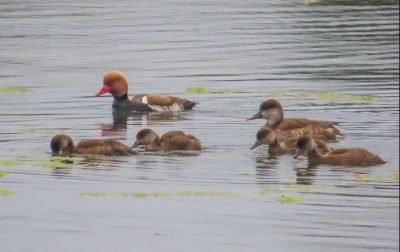
Worthy of a mention is the successful breeding of Red-crested Pochards at Chichester Gravel Pits – they were seen again and photographed (attached, by Andrew House) on 3rd.
A Roseate Tern was seen at Church Norton again on 4th and another was at Rye Hbr on 1st. At Selsey Bill two Black Terns flew east on 6th and a Little Gull went west on 4th.
The Glossy Ibis was noted again from the North Wall at Pagham Hbr on 5th.
Weekly Report: 25-31 May
The week was notable for exceptionally high spring temperatures, a “heatwave” over northwestern Europe making daily headline news. The long-staying Long-tailed Duck (a winter visitor) on the Cuckmere thought it was about time to leave and was not seen after 25th. The long-staying pair of Garganey at Pulborough Brooks, however, was present throughout the week and still there on 30th.
There wasn’t much to say about waders, although a Little Stint was at Flat Beach (Rye Hbr) on 28th and 29th.
Two Common Cranes flew over Wilmington on 26th and a Glossy Ibis was at the Breech Pool, Pagham Hbr, on 26th and 27th.
There were three reports of Quail on 29th: at least two birds were sound-recorded during the night over Eastbourne and singing males were found at Beachy Head and Hazelholt Bottom (Shoreham) after sunrise a few hours later.
Honey-buzzards on territory were reported from the published watchpoints at Llama Park (Wych Cross) and Woolbeding Common (nr Midhurst). Two migrating birds were over Beachy Head on 27th (photo by Laurence Pitcher attached) and others were noted over Ardingly on 29th and Patcham the following day. A rare Black Kite flew south over Amberley on 25th and an Osprey was at Arlington Res on 31st.
A Little Gull was seen again at Church Norton on 25th and one was at Rye Hbr on 29th.
Reports of Golden Oriole came from Buxted Park (Uckfield) on 27th and Coates Common at Lord’s Piece on 28th. On the morning of the 30th a Bee-eater flew west over Beachy Head and a Woodchat Shrike was found at Ambersham Common.
A singing Marsh Warbler made a brief appearance near the pub on the headland at Beachy Head in the early morning of 29th and by all accounts it was a highly entertaining bird, throwing in the sounds of Black-backed Puffback (a southern African species) to its usual crazy mix of mimicry (https://beachybirder.wordpress.com/).
Two Hawfinches (an adult and a juvenile) were observed at West Dean Woods on 28th.