
BTO/RSPB/NE Heathland Birds Survey 2025
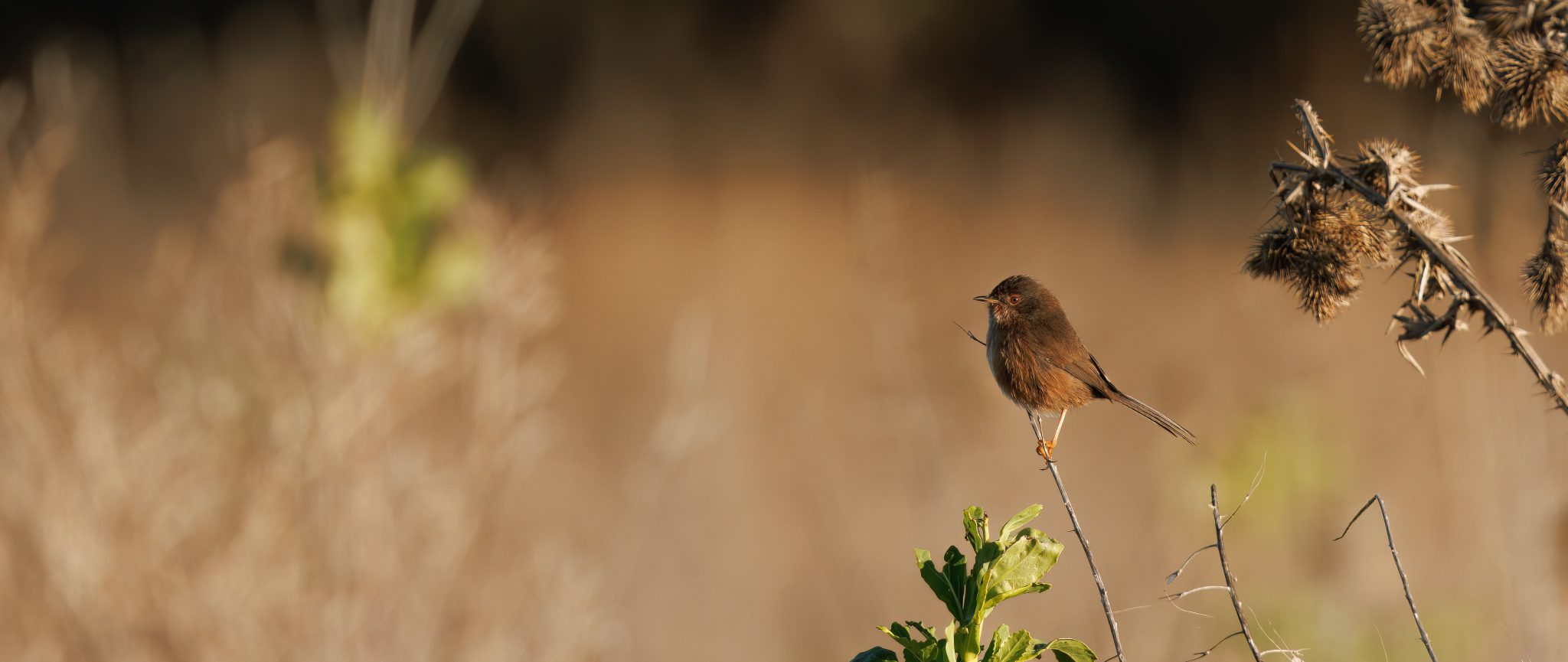
This BTO-organised survey will cover the heathland specialist birds nightjar, woodlark and Dartford warbler in all breeding habitats rather than being a survey of heathlands so there are many squares available in Sussex that are on farmland or in woodland as well as on heathland habitats.
The survey will involve morning visits for woodlark during the period 15 February to 31 May, morning visits for Dartford warbler during the period 1 April to 30 June, and evening visits for nightjar during the period 25 May to 31 July.
The online survey application is now live so please look at the map at https://www.bto.org/our-
Most squares that will be covered by regular surveyors on the West Sussex commons and in the Ashdown Forest area have now been allocated so any remaining squares in these areas are open to anybody. There are squares available in these general areas:
South Downs north of Emsworth and Chichester
Eartham Wood and Houghton Forest
West Sussex commons and farmland around Midhurst and Petworth
Rewell Wood and Arundel Park
St. Leonards Forest
Tilgate Forest
Worth Forest
Paddockhurst Park
Wakehurst Place
Chailey Commons
Sheffield Forest
Battle Great Wood
Further information is available at https://www.bto.org/our-science/projects/heathland-birds-survey or please contact Helen Crabtree at hcrabtree@gmail.com if you have any questions.
Wetland Bird Survey (WeBS): sites vacant
WeBS is the principal monitoring scheme for non-breeding waterbirds in the UK which aims to provide data for the conservation of their populations and wetland habitats. The data collected are used to assess the size of waterbird populations, assess trends in numbers and distribution, and identify and monitor important sites for waterbirds.
Once-monthly, synchronised counts are carried out (primarily September to March) at as many wetland sites as possible. Counts can take anything from 15 minutes to 3 hours depending on the size of the site. Dates of the counts are pre-determined by the BTO and are set on Sundays. It is generally accepted that a count can be carried out a day or more either side of these dates if counters have other commitments and there is not an interchange of species with other neighbouring sites.
Sites requiring new volunteers are listed below (updated 14/1/2025). For further information please contact:
ARUN VALLEY: Helen Crabtree (hcrabtree@gmail.com)
River Arun: Houghton to South Stoke
COASTAL SITES: Dave Boddington ( davebodds@yahoo.co.uk)
Shinewater Lake (Eastbourne)
INLAND SITES: Helen Crabtree (hcrabtree@gmail.com)
Bewl Water (to join existing team)
Glynleigh Level (Pevensey Levels)
Manxey Level (Pevensey Levels)
Manxey Moat (Pevensey Levels)
Mark Dyke (Pevensey Levels)
Marsh Foot and Church Farm (Pevensey Levels)
Old Haven (Pevensey Levels)
Wallers Haven North (Pevensey Levels)
These and other more minor vacant sites are all viewable on the map here.
BTO Winter Gull Survey (WinGS)
The BTO are running a Winter Gull Survey (WinGS), with counts having taken place over last winter (2023-2024) and due to continue over this next winter (2024-2025), with the primary aim of obtaining new population estimates for the principal species that winter in the UK and assessing how populations have changed since the last survey in 2003/04–2005/06. The results of this survey will also help to assess the impact of the ongoing outbreak of Highly Pathogenic Avian Influenza (HPAI) on gull populations. The survey involves coordinated visits to key roost sites and additional visits to sample stretches of coastline and sample squares inland, with visits to key sites having been prioritised for January 2024. Visits to sample sites and outstanding key sites will then be prioritised for January 2025.
Supplementary counts will also be taking place this autumn with the key survey date being 29th September 2024 and with surveys acceptable a few days either side of this date. Further information about taking part can be found at https://www.bto.org/our-science/projects/winter-gull-survey/taking-part.
Key sites in Sussex for which volunteers are needed for the September count are listed below (updated 10/9/2024); please contact the organisers listed below for more information. Sites can also be selected online after registering at https://www.bto.org/our-science/projects/winter-gull-survey.
Chichester Harbour: please contact Peter Hughes at peter.hughes@conservancy.co.uk.
Coastal Sussex: please contact Dave Boddington at davebodds@yahoo.co.uk.
Pagham Harbour
Aldwick
Climping
Littlehampton
Rustington
East Preston
Ferring
Goring-by-Sea
West Worthing
East Worthing
Lancing
Shoreham Beach
Southwick Beach
Hove
Brighton Marina
Newhaven Harbour
Newhaven Tidemills
Seven Sisters/Birling Gap
Pevensey Bay
Bexhill-on-Sea
St. Leonards
Inland Sussex: please contact Helen Crabtree at hcrabtree@gmail.com.
Darwell Reservoir
BTO Breeding Bird Survey 2024: squares available
There is still time to sign up to take part in the BTO Breeding Bird Survey (BBS) for this coming breeding season. Some squares have recently become available and there are plenty of squares available right across the county; some of these squares are accessible if you have limited mobility or if you are reliant on or choose to use public transport.
This national monitoring scheme is administered by the BTO and jointly funded by the BTO, JNCC and RSPB. It has been running since 1994 and its primary aim is to provide population trends for common and widespread bird species in the UK. Population trends for Sussex are also produced and published in the Sussex Bird Report. Survey plots are randomly-selected 1-km squares of the National Grid, and the same squares are surveyed each year. Volunteers visit their squares three times each year during the breeding season, once to record simple habitat data, and twice to walk a fixed route, recording birds seen and heard. There are more than 200 BBS squares across Sussex, covering every type of habitat, and new volunteers are always needed.
Volunteers must be able to recognise common and widespread birds by sight and sound, and must be able to physically get around a survey route reasonably early in the morning, but beyond those requirements absolutely anybody is welcomed into this survey scheme. Previous experience of survey work is not necessary and help and support from experienced volunteers can be arranged if required. Finally there is no requirement to conduct surveys alone – take a friend with you!
The full list of BBS squares (asterisks indicate priority squares that have been surveyed before) in Sussex which currently need volunteers for the 2024 breeding season (updated 8/8/2024) is as follows:
SU7907 near Funtington*
SU8527 near Milland*
SU8615 Westdean Woods*
SU8718 near Cocking*
SU9113 near East Dean*
SU9729 near Northchapel*
SU9814 Bignor*
SU9923 near Petworth*
SZ7996 East Wittering*
SZ8199 near Birdham
TQ0124 near Kirdford*
TQ0322 near Codmore Hill*
TQ0601 East Preston*
TQ0826 Billingshurst
TQ1004 Durrington*
TQ1323 Dragon’s Green*
TQ2536 Gossops Green
TQ2638 Langley Green*
TQ2836 central Crawley
TQ3319 Ditchling Common*
TQ3618 near Wivelsfield Green*
TQ4821 Uckfield*
TQ4938 near Blackham*
TQ5023 Buxted*
TQ5026 High Hurstwood
TQ5128 near Crowborough*
TQ5211 near Golden Cross*
TQ5220 Blackboys*
TQ5228 near Crowborough*
TQ5435 near Eridge Station*
TQ5639 Tunbridge Wells*
TQ6817 near Penhurst
TQ7624 near Bodiam
TQ7811 Hollington*
TQ8518 near Udimore*
The following BBS squares may be accessible to you if you have limited mobility (including using a wheelchair) as the survey routes are entirely on pavements and minor roads:
SZ7996 East Wittering
TQ0601 East Preston
TQ2638 Langley Green
TQ2836 central Crawley
TQ5639 Tunbridge Wells
The following BBS squares may be accessible by train as they are close to rail stations (other squares may be easily accessible by bus):
TQ0601 East Preston
TQ2836 central Crawley
TQ3319 Ditchling Common
TQ3618 near Wivelsfield Green
TQ4821 Uckfield
TQ5023 Buxted
TQ5435 near Eridge Station
For further information, please contact Helen Crabtree at hcrabtree@gmail.com. Please do not hesitate to ask if you have any questions about the survey or about any of the available squares.
BTO Breeding Bird Survey: practice sessions 2024
Some informal practice sessions are planned this year in Sussex for the BTO/RSPB/JNCC Breeding Bird Survey and anybody who is considering taking part in the BBS is welcome to come along to one of the sessions. Anybody of any age is welcome and young people are especially welcome although under-18s must be accompanied by an adult. The planned dates are:
1. Saturday 9th March at the Knepp Estate (Dave Boddington);
2. Saturday 16th March at Pulborough Brooks RSPB (Helen Crabtree);
3. Friday 22nd March in Burgess Hill (Helen Crabtree);
4. Sunday 24th March at Lewes Railway Land (Nevil Hutchinson);
5. Wednesday 27th March in Arundel town (Helen Crabtree);
6. Saturday 6th April at Sedlescombe village (East Sussex) (Christine George).
The aims of these morning outdoor sessions will be (1) to give confidence to new and nearly-new BBS volunteers, (2) to sort out any problems that volunteers may have with the BBS and to provide a chance for volunteers to ask questions about the survey, and (3) to give everybody involved a chance to meet and socialise with other BBS volunteers. Anybody attending who does not currently take part in the BBS should be able to find out what is involved and then hopefully sign up for a square.
Please contact Helen Crabtree at hcrabtree@gmail.com if you would like to attend one of these training sessions/social meet-ups, and you will be sent further details nearer the time.
Arun to Adur farmland bird monitoring event
An event is being planned for Saturday 3 February 2024 that will bring together volunteer birdwatchers and farmers within the Arun to Adur Farmers Group. The intention is that volunteers will go out in small groups with farmers at a central location (to be confirmed but within the Arun to Adur area) and help to increase the confidence of the farmers in identifying and counting the farmland birds present. After a morning spent looking for birds the plan will be to then meet back with other volunteers and farmers for some networking and food. Hopefully some useful connections will be made and volunteers will optionally be able to make arrangements to meet farmers at other farms on later dates to help them to complete the GWCT Big Farmland Bird Count.
If you would be interested in meeting some farmers and sharing your bird knowledge with them then please come along! Please contact Helen Crabtree at hcrabtree@gmail.com if you would like to attend and you will be sent details of the meeting time and place.
BTO/GWCT breeding woodcock survey 2023
There is still time to sign up to take part in the full national survey of breeding woodcock running in 2023 organised by the BTO with the GWCT as partners. The last full national survey of breeding woodcock was in 2013. Indications from annual monitoring since 2013 suggest that the population may have decreased. The 2023 survey will help to provide the best possible assessment of the population status, as well as further helping to understand the causes of the population decline and also to inform the woodcock shooting policy review.
This survey will require two or three dusk visits to selected sites in May and June to make point counts of roding woodcock. Please see the report here about the results of the 2013 survey in Sussex for information about the survey methods. In 2023 there are some changes to the method of habitat recording but the method of counting encounters with roding woodcock will remain exactly the same.
Priority sites are those that were surveyed in 2013 and those for which volunteers are being sought are listed below (updated 4/5/2023). The survey involves counting woodcock encounters from a fixed point which should be chosen within or on the edge of the largest area of woodland within or close to the square.
SU8811 Charleton Down: this includes parts of Goodwood Country Park
SU9115 Eastdean Wood: part of a large wooded area above Graffham Down
SU9119 Ambersham Common
TQ4032 Hindleap
TQ4131 Wych Cross
TQ4427 Nutley
TQ4429 Marlpits
TQ4629 Camp Hill
TQ4631 Gills Lap
TQ4729 near Camp Hill
TQ4932 Marden’s Hill
TQ5031 Crowborough Common
TQ5736 Hargate Forest
TQ7623 Lordship Wood: this is a large mixed forest just east of Robertsbridge
TQ8521 Beckley Woods
TQ8614 Guestling Wood
If you would like more information or are interested in helping with this project please contact Helen Crabtree at hcrabtree@gmail.com or select a site online at https://www.bto.org/our-science/projects/woodcock-survey where there are more squares available than the priority sites listed above.
BTO Breeding Bird Survey 2023: accessible squares available
This is the time of the year to sign up to take part in the BTO Breeding Bird Survey (BBS) for this coming breeding season. Some squares have recently become available and there are plenty of squares available right across the county; some of these squares are accessible if you have limited mobility or if you are reliant on or choose to use public transport.
This national monitoring scheme is administered by the BTO and jointly funded by the BTO, JNCC and RSPB. It has been running since 1994 and its primary aim is to provide population trends for common and widespread bird species in the UK. Population trends for Sussex are also produced and published in the Sussex Bird Report. Survey plots are randomly-selected 1-km squares of the National Grid, and the same squares are surveyed each year. Volunteers visit their squares three times each year during the breeding season, once to record simple habitat data, and twice to walk a fixed route, recording birds seen and heard. There are more than 200 BBS squares across Sussex, covering every type of habitat, and new volunteers are always needed.
Volunteers must be able to recognise common and widespread birds by sight and sound, and must be able to physically get around a survey route reasonably early in the morning, but beyond those requirements absolutely anybody is welcomed into this survey scheme. Previous experience of survey work is not necessary and help and support from experienced volunteers can be arranged if required; there are also some informal practice sessions arranged in Sussex in March and April this year. Finally there is no requirement to conduct surveys alone – take a friend with you!
The following BBS squares may be accessible to you if you have limited mobility (including using a wheelchair) as the survey routes are entirely on pavements and minor roads:
SU8605 central Chichester
SZ7996 East Wittering
TQ2638 Langley Green
TQ2836 central Crawley
TQ4612 near Ringmer
TQ5130 central Crowborough
TQ5639 Tunbridge Wells
TQ5901 Willingdon
The following BBS squares may be accessible by train as they are close to rail stations (other squares may be easily accessible by bus):
SU8605 central Chichester
TQ2836 central Crawley
TQ4821 Uckfield
TQ5130 central Crowborough
TQ5738 Tunbridge Wells
TQ5901 Willingdon
The full list of BBS squares (asterisks indicate priority squares that have been surveyed before) in Sussex which currently need volunteers for the 2023 breeding season (updated 13/4/2023) is as follows:
SU7800 near West Itchenor
SU7808 near Woodmancote*
SU8102 near Bosham Hoe*
SU8307 near West Stoke*
SU8527 near Milland*
SU8605 central Chichester*
SU8612 West Dean
SU8624 Tote Hill near Midhurst
SU9207 near Boxgrove*
SU9729 near Northchapel*
SZ7996 East Wittering*
SZ8199 near Birdham
SZ8696 Pagham Harbour*
SZ8698 Sidlesham*
TQ0124 near Kirdford*
TQ0502 Rustington*
TQ1337 Okewood Hill (Surrey)*
TQ2022 Cowfold*
TQ2122 Cowfold*
TQ2536 Gossops Green
TQ2638 Langley Green*
TQ2828 Staplefield*
TQ2836 central Crawley
TQ4612 near Ringmer*
TQ4821 Uckfield*
TQ4938 near Blackham*
TQ5026 High Hurstwood
TQ5128 near Crowborough*
TQ5130 central Crowborough
TQ5220 Blackboys*
TQ5228 near Crowborough*
TQ5435 near Eridge Station*
TQ5738 Tunbridge Wells*
TQ5829 near Mark Cross*
TQ5901 Willingdon*
TQ6419 Earl’s Down*
TQ7111 near Ninfield*
TQ7811 Hollington*
TQ8518 Udimore*
TV5797 near East Dean*
For further information, please contact Helen Crabtree at hcrabtree@gmail.com. Please do not hesitate to ask if you have any questions about the survey or about any of the available squares.
BTO/JNCC/RSPB Breeding Bird Survey: latest news
Thanks to the enthusiasm and dedication of so many amazing volunteers 184 squares have been surveyed for the BBS in the Sussex region this year which is a new record!
Available here are trend graphs plotted for 36 common species using Sussex BBS data for 1994 to 2021; these can be compared with national and regional trend graphs available at http://www.bto.org/volunteer-surveys/bbs/latest-results/trend-graphs. The trend graphs are plotted using the percentage changes each year since the start of the survey in 1994, presented as indices relative to an arbitrary index of 1.0 in 1994. Some of the graphs show encouraging stability of population levels or even increases. House sparrow and song thrush numbers in Sussex appear to be increasing slightly after years of stability, and the long-term declines in starling and mistle thrush numbers appear to have halted. Population levels of skylarks and yellowhammers in Sussex appear to be more or less stable. Obviously the real concerns are cuckoo, chaffinch, greenfinch and swift; the real value of the BBS is in identifying these most seriously declining species.
Now is a good time of the year to consider taking part in the BBS, because if you take on a square you will also have the option to take part in the Sussex Winter Bird Survey (SWBS) by surveying the same square over the coming winter, beginning on 1 November 2022.
The BBS is a national monitoring scheme administered by the BTO and jointly funded by the BTO, JNCC and RSPB. It has been running since 1994 and its primary aim is to provide population trends for common and widespread bird species in the UK. Population trends for Sussex are also produced annually. Survey plots are randomly-selected 1-km squares of the National Grid, and the same squares are surveyed each year. Volunteers visit their squares three times each year during the breeding season, once to record simple habitat data, and twice to walk a fixed route, recording birds seen and heard. There are more than 200 BBS squares across Sussex, covering every type of habitat, and new volunteers are always needed. Volunteers must be able to recognise common and widespread birds, but previous experience of survey work is not necessary. Help and support from experienced volunteers can be arranged if required, and some informal group practice sessions will hopefully be planned for March 2023 to which new volunteers will be invited.
The BBS squares (asterisks indicate priority squares that have been surveyed before) in Sussex which currently need volunteers for the 2023 breeding season are (updated 6/1/2023):
SU7800 near West Itchenor
SU7808 near Woodmancote*
SU8102 near Bosham Hoe*
SU8307 near West Stoke*
SU8527 near Milland*
SU8602 Chichester Canal*
SU8605 central Chichester*
SU8612 West Dean
SU8624 Tote Hill near Midhurst
SU8926 Henley Common
SU9113 near East Dean*
SU9127 near Fernhurst*
SU9207 near Boxgrove*
SU9304 Westergate*
SU9729 near Northchapel*
SZ7996 East Wittering*
SZ8199 near Birdham
SZ8696 Pagham Harbour*
SZ8698 Sidlesham*
TQ0124 near Kirdford*
TQ0503 north Rustington*
TQ2022 Cowfold*
TQ2122 Cowfold*
TQ2536 Gossops Green
TQ2638 Langley Green*
TQ2733 Tilgate Forest*
TQ2828 Staplefield*
TQ2836 central Crawley
TQ4612 near Ringmer*
TQ4738 near Blackham*
TQ4821 Uckfield*
TQ4938 near Blackham*
TQ5026 High Hurstwood
TQ5128 near Crowborough*
TQ5130 central Crowborough
TQ5220 Blackboys*
TQ5228 near Crowborough*
TQ5435 near Eridge Station*
TQ5511 Lower Dicker*
TQ5738 Tunbridge Wells*
TQ5829 near Mark Cross*
TQ5901 Willingdon*
TQ6419 Earl’s Down*
TQ7111 near Ninfield*
TQ7811 Hollington*
TQ8326 Northiam Station*
TQ8413 near Three Oaks
TQ8518 Udimore*
TQ8722 Peasmarsh*
For further information, please contact Helen Crabtree at hcrabtree@gmail.com.
Wetland Bird Survey (WeBS): sites vacant
The new WeBS season starts in September and there are sites across Sussex that need new volunteers; now is a really good time to get started with this survey.
WeBS is the principal monitoring scheme for non-breeding waterbirds in the UK which aims to provide data for the conservation of their populations and wetland habitats. The data collected are used to assess the size of waterbird populations, assess trends in numbers and distribution, and identify and monitor important sites for waterbirds.
Once-monthly, synchronised counts are carried out (primarily September to March) at as many wetland sites as possible. Counts can take anything from 15 minutes to 3 hours depending on the size of the site. Dates of the counts are pre-determined by the BTO and are set on Sundays. It is generally accepted that a count can be carried out a day or more either side of these dates if counters have other commitments and there is not an interchange of species with other neighbouring sites.
Sites requiring new volunteers are listed below (updated 25/10/2022). For further information please contact:
CHICHESTER HARBOUR: Pete Hughes (peter.hughes@conservancy.co.uk)
Three vacant sectors: counts carried out each month September to March on a Saturday
ARUN VALLEY: Helen Crabtree (hcrabtree@gmail.com)
Pulborough Brooks (to join existing team): counts carried out each month on a Monday morning
COASTAL SITES: Dave Boddington ( davebodds@yahoo.co.uk)
INLAND SITES: Helen Crabtree (hcrabtree@gmail.com)
Bewl Water (to join existing team)
Bodiam Castle Moat
Darwell Reservoir
Ditchling Common
Forest Mere
Pond Lye
Gravetye Lakes
Herstmonceux Castle Lake
Lurgashall Mill Pond
Manxey Level (Pevensey Levels)
Manxey Moat (Pevensey Levels)
Mark Dyke (Pevensey Levels)
Marsh Foot and Church Farm (Pevensey Levels)
Old Haven (Pevensey Levels)
Wakehurst Place Lakes
Whelpley Level (Pevensey Levels)